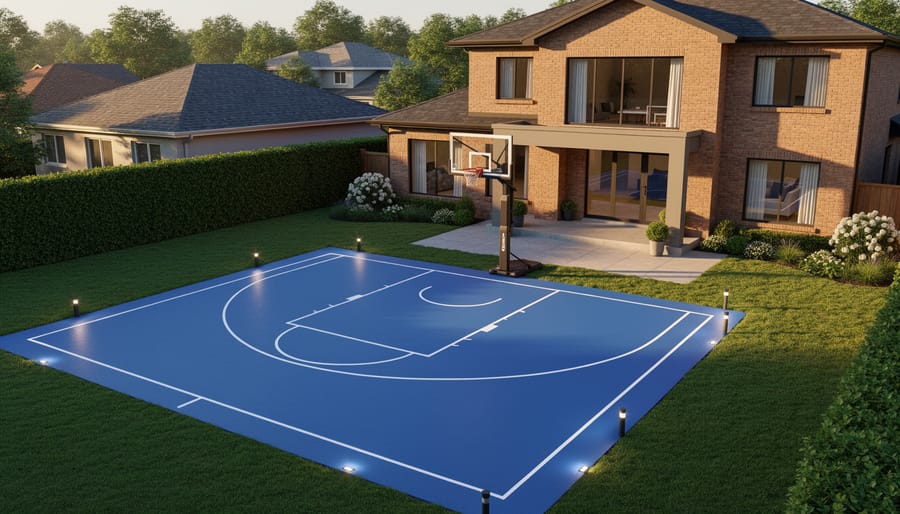
Inheriting a property with a basketball court presents a unique opportunity to sell inherited house quickly—if you approach it strategically. The specialized amenity that seems like a complication can actually accelerate your sale when marketed to the right buyers.
Target sports-minded families, coaches, and athletic programs who actively seek properties with practice facilities. These buyers often pay premium prices and move quickly when they find rare features like full or half basketball courts. Municipal recreation departments and private sports academies also represent motivated purchaser pools that conventional real estate approaches typically miss.
Price the property competitively by obtaining a specialized appraisal that accurately values the court’s construction quality, surface condition, and maintenance requirements. Standard comparative market analyses often undervalue or ignore sports amenities, leaving money on the table or deterring serious buyers with inflated pricing.
Consider alternative sale methods if traditional listings stall. Cash buyers and real estate investors specializing in unique properties can close in as little as seven days, though often at 10-15 percent below market value. This trade-off makes sense when estate settlement timelines, ongoing maintenance costs, or tax implications create urgency.
Document the court’s specifications, maintenance history, and any upgrades like professional surfacing, adjustable hoops, or lighting systems. This information builds buyer confidence and justifies your asking price while demonstrating the facility’s value to athletic-focused purchasers who understand quality sports infrastructure.
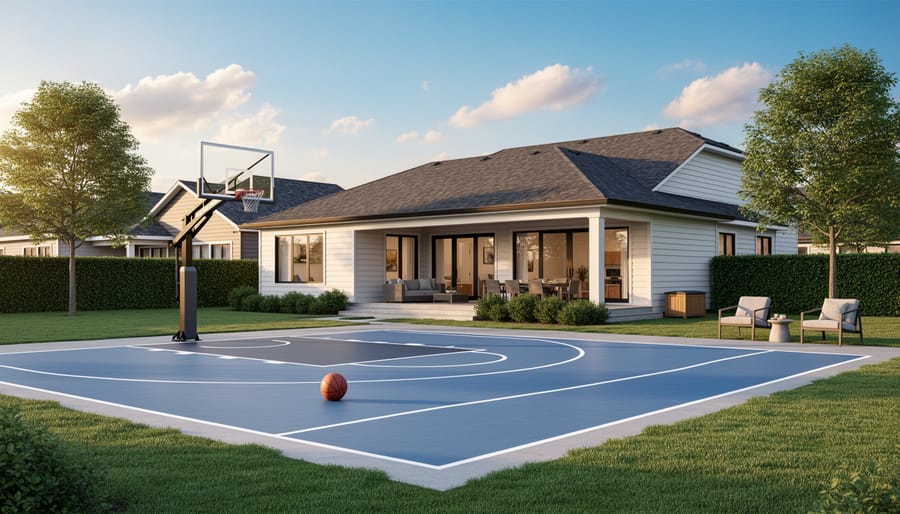
When selling an inherited property with a basketball court, you’ll face a fundamental market challenge: your potential buyer pool is significantly smaller than for comparable homes without this specialized amenity. While some buyers view a residential basketball court as a premium feature, the majority of homebuyers have different priorities and may see it as wasted yard space or an unnecessary maintenance burden.
This selectivity directly impacts your timeline. Standard residential properties typically attract interest from families seeking traditional outdoor living areas like gardens, patios, or play spaces for young children. A basketball court occupies considerable square footage that could otherwise serve these more universally desired purposes. The specialized nature means you’re primarily targeting sports enthusiasts, families with basketball-playing children, or fitness-focused buyers—a demographic that represents only a fraction of the active market.
The reduced buyer interest often translates to extended listing periods. Properties can sit on the market 30-60 days longer than similar homes in the neighborhood, particularly problematic when you’re managing estate timelines or carrying costs. This niche appeal makes strategic positioning and realistic pricing essential to achieving a faster sale while maximizing your inherited property’s value.
Potential buyers evaluating an inherited property with a basketball court will carefully consider the ongoing maintenance requirements and liability implications. Court surfaces require regular cleaning, crack repair, and periodic resurfacing to remain safe and functional. Weather exposure accelerates deterioration, particularly in Canadian climates where freeze-thaw cycles can damage asphalt or concrete surfaces. Hoops, nets, and backboards need replacement over time, adding to ownership costs.
Safety concerns often weigh heavily on buyers’ minds. Property owners bear responsibility for injuries occurring on their basketball courts, potentially requiring additional liability insurance coverage. This concern intensifies for families with young children or those unfamiliar with managing recreational facilities. The court may also necessitate dedicated space for sports equipment storage, further complicating property management.
When marketing your inherited property, address these concerns proactively by providing maintenance records, recent inspection reports, and documentation of any upgrades or repairs. Transparency about the court’s condition helps qualified buyers make informed decisions while filtering out those unwilling to assume these responsibilities. Consider obtaining quotes for resurfacing or removal to give prospective purchasers clear options and associated costs.
Professional documentation of your basketball court’s condition is essential for building buyer confidence and justifying your asking price. Begin by commissioning a thorough inspection from a qualified sports facility professional who can assess the court surface, hoops, lines, lighting, and drainage systems. This inspection report provides transparency that estate buyers appreciate and helps prevent post-sale disputes.
Gather all maintenance records, including resurfacing dates, equipment replacements, and seasonal upkeep documentation. These records demonstrate responsible ownership and help buyers understand the court’s remaining lifespan. If you’ve made recent upgrades—such as installing professional-grade hoops, LED lighting, or weather-resistant surfaces—obtain receipts and warranties to transfer to the new owner.
The basketball equipment quality significantly impacts property value, so have specialists evaluate whether components meet current safety standards. If inspections reveal minor issues like faded lines or loose hardware, addressing these before listing can prevent buyers from requesting significant price reductions. Consider creating a visual condition report with dated photographs showing the court from multiple angles and close-ups of key features.
This comprehensive documentation package demonstrates professionalism, reduces buyer uncertainty, and positions your inherited property as a well-maintained asset rather than a potential liability requiring unknown investments.
To attract sports-minded buyers for your inherited property, focus your marketing efforts where these audiences naturally gather. Partner with local sports academies, high school athletic departments, and community recreation centers to spread the word about the property. Many coaches and athletic trainers maintain networks of families seeking homes that support their children’s training needs.
List the property on specialized real estate platforms that cater to homes with unique amenities, emphasizing the basketball court as a competitive advantage for serious young athletes. Social media marketing targeting parents of travel team players and competitive youth athletes can be particularly effective. Consider Facebook groups dedicated to local sports leagues and Instagram communities focused on youth basketball development.
Reach out directly to sports organizations that might use the facility for team practices or summer training camps. Some travel teams, club organizations, or private coaching businesses actively seek residential properties with courts for intensive training programs.
Highlight quantifiable benefits in your marketing materials: estimated annual gym membership savings, convenience of at-home practice, and the property’s potential as a revenue-generating asset through court rentals. Professional photography showcasing the basketball court during active use helps potential buyers visualize the space’s practical applications. Time-lapse videos demonstrating the court’s lighting and playability can strengthen your listing’s appeal to serious buyers who understand the value of quality training facilities.
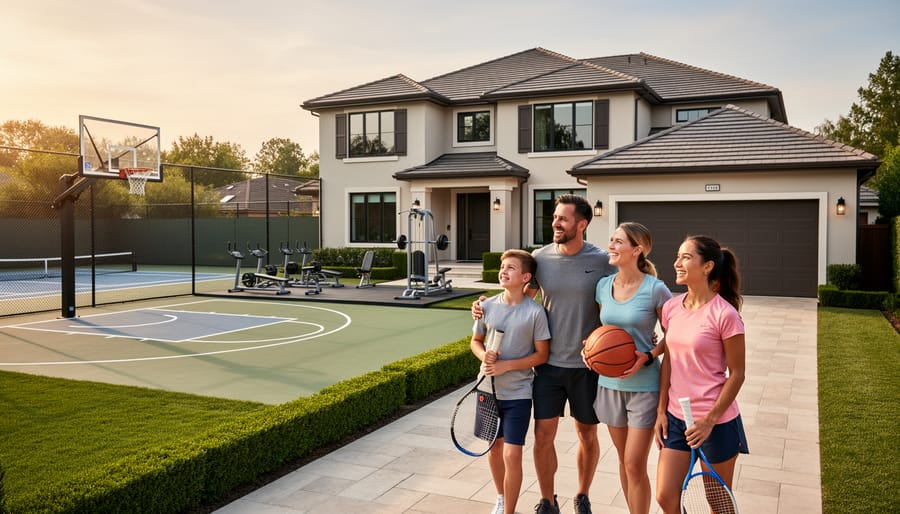
When marketing your inherited property, emphasize the basketball court’s versatility to broaden buyer appeal. Position this space as more than a single-purpose amenity by showcasing alternative uses that resonate with different buyer profiles. The court can serve as an excellent venue for various recreational activities, from pickleball and badminton to roller hockey or even outdoor yoga and fitness classes. For families, highlight how the space accommodates multiple court sports amenities and social gatherings like community events or children’s parties. Buyers with entrepreneurial interests may see potential for private training sessions or sports camps. Additionally, present conversion possibilities for those who might prefer different uses—the flat, paved surface can be repurposed as additional parking, a skateboard area, or even transformed into a garden space. Including photos or suggestions of these alternatives in your listing materials helps prospective buyers envision possibilities beyond traditional basketball use, ultimately accelerating the sale process.
A residential basketball court typically adds between 2% to 8% to a property’s value in Canadian markets, though this varies significantly by region and buyer demographics. In urban centres like Toronto and Vancouver, where outdoor space commands premium pricing, a well-maintained court can enhance appeal substantially. However, in markets with abundant land, the impact diminishes.
The return on investment depends heavily on three factors: court condition, property size ratio, and local market preferences. A full-size court occupying 25% of a modest suburban lot may actually deter buyers who prioritize landscaping or family play areas. Conversely, properties with generous acreage in sports-focused communities often see stronger returns.
Regional variations across Canada are notable. Ontario and British Columbia markets generally respond more favourably to sport amenities than Prairie provinces, where buyers may prefer agricultural space. Quebec markets show moderate interest, particularly in suburban areas near Montreal where basketball participation rates are higher.
For inherited properties requiring quick sales, understanding these market dynamics is essential. While the court may attract niche buyers willing to pay premium prices, it simultaneously narrows your potential buyer pool. Professional appraisers familiar with recreational amenities can provide accurate assessments specific to your local market conditions, helping you price strategically for faster transactions.
Setting competitive pricing for a quick inherited property sale requires strategic thinking, especially with specialized amenities. While your basketball court adds value, pricing slightly below comparable properties without this feature can generate immediate buyer interest and multiple offers.
Consider pricing 5-10% below market value for standard homes in your area. This approach creates urgency without undervaluing your property’s unique sports facility. The basketball court itself may represent significant construction costs, but remember that perceived value varies among buyers. Some will see it as a premium amenity worth paying for, while others view it as neutral or requiring modification.
Work with a real estate agent experienced in properties with recreational features to establish a floor price that respects both the land value and the court’s construction quality. They can analyze recent sales of homes with pools, tennis courts, or similar amenities to benchmark pricing strategies.
In markets with strong sports culture or family-oriented neighborhoods, you might price closer to market value since the basketball court appeals directly to your target demographic. However, if timelines are tight, an aggressive pricing strategy often proves most effective. The goal is stimulating enough interest that motivated buyers compete, potentially driving the final sale price higher than your initial listing despite the below-market positioning.
Cash buyers and real estate investors often view properties with basketball courts through a unique financial lens. While traditional homebuyers may hesitate at the specialized amenity, investors frequently recognize the income-generating potential these features offer.
Rental property investors particularly value basketball courts as they can command premium monthly rates from sports-oriented tenants, including families with athletic children or amateur athletes seeking practice facilities. In Canadian markets where youth sports participation remains strong, this amenity can reduce vacancy periods and attract longer-term, quality tenants who value the recreational opportunity.
Institutional buyers, including property management companies and student housing developers, may see strategic value in basketball courts. These buyers understand that sports amenities differentiate their properties in competitive rental markets, particularly near universities or in family-oriented neighborhoods.
Investors also appreciate that basketball courts require less maintenance complexity compared to pools or tennis courts, making them attractive long-term assets. The concrete or asphalt surface represents a one-time infrastructure investment with minimal ongoing costs.
When marketing your inherited property to investors, emphasize the court’s condition, dimensions, and income potential rather than personal memories. Provide documentation of recent maintenance and highlight how the amenity supports higher rental valuations. Cash buyers seeking quick closings often prioritize properties with unique features that justify above-market rents, making your basketball court a genuine selling advantage in the investment property sector.
When time is critical and traditional listings haven’t generated suitable offers, auction formats can accelerate the sale of your inherited property with a basketball court. This approach works particularly well when you’ve already marketed to niche buyers without success or when estate settlement deadlines require immediate action.
Auctions create competitive urgency among qualified buyers, potentially driving prices up when multiple bidders recognize the property’s unique value. This format appeals especially to sports facility operators, recreational developers, or investors seeking specialized properties. In the Canadian market, both live and online auction platforms have successfully sold properties with athletic amenities, often attracting international buyers who might not see traditional listings.
Consider setting a reserve price that protects your minimum acceptable value while still encouraging active bidding. Experienced auction houses familiar with sports properties can help position your basketball court as a premium feature rather than a liability, targeting their marketing toward buyers who specifically value athletic facilities.
Expedited sale programs through select real estate firms offer another time-sensitive option, though typically at reduced prices. These work best when immediate liquidity outweighs maximizing sale value. Whether choosing auction or expedited formats, ensure your property documentation clearly outlines the basketball court’s specifications, condition, and any associated maintenance records to minimize buyer hesitation during compressed decision timeframes.
When preparing an inherited property with a basketball court for a quick sale, focus on cost-effective improvements that maximize visual appeal and functionality. Start with a thorough surface cleaning using a pressure washer to remove dirt, mildew, and debris that accumulate over time. This simple step dramatically improves the court’s appearance and signals proper maintenance to potential buyers.
Next, inspect and refresh the court lines. Faded or peeling boundary markings diminish the professional look of the facility. Standard acrylic paint designed for outdoor courts is affordable and can be applied quickly, restoring the crisp appearance buyers expect. Fresh lines communicate that the basketball court components have been properly maintained.
Examine the basketball hoop system carefully. Tighten any loose bolts, ensure the backboard is secure, and verify the rim is properly attached and level. If the net is missing or deteriorated, replace it immediately—this inexpensive fix has significant visual impact. For adjustable hoops, confirm the height mechanism functions smoothly.
These targeted repairs typically cost under $500 but substantially enhance the court’s marketability, helping position your inherited property as move-in ready for sports-minded buyers seeking immediate use.
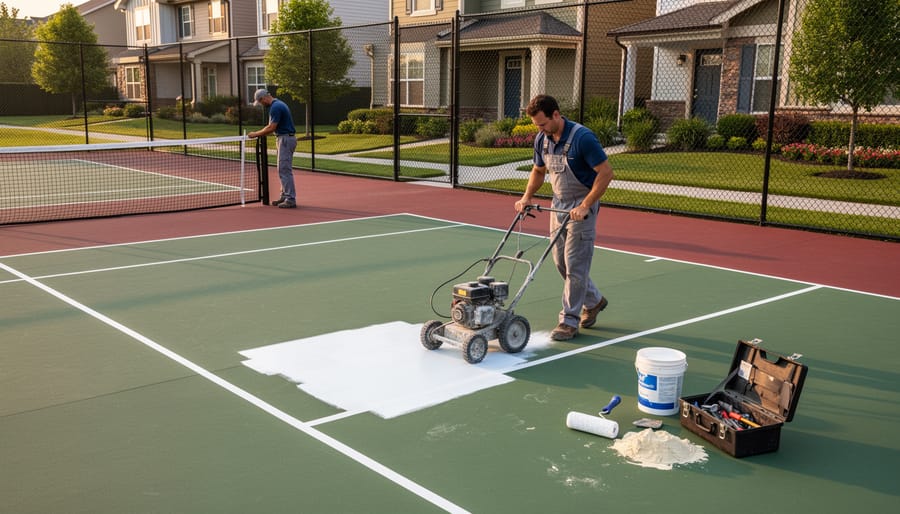
Strategic refurbishment can significantly accelerate your sale when market conditions support it. If comparable homes in your area are selling within 30-45 days and your property is priced competitively, targeted improvements demonstrate value to serious buyers. Consider investing in court resurfacing if the playing surface shows visible cracking or fading that might trigger lowball offers. Fresh line painting and professional cleaning typically cost between $1,500-$3,500 but can justify a higher asking price while attracting athletic families and fitness-conscious buyers.
Upgrading to modern quality basketball hoops with adjustable height features broadens appeal to buyers with children of varying ages. This relatively modest investment, usually ranging from $500-$2,000, positions the court as a versatile family amenity rather than a single-purpose facility. Refurbishment makes particular sense in suburban markets where outdoor recreational spaces command premium pricing, or when pre-sale inspections identify safety concerns that could derail closing. Work with local sports facility contractors who understand current standards and can complete improvements quickly, ensuring renovations don’t delay your timeline while maximizing return on investment.
When selling an inherited property in Canada, understanding the tax implications is essential for maximizing your proceeds, particularly when the property includes specialized amenities like a basketball court.
In Canada, inherited properties are subject to specific capital gains tax rules. If the property was the deceased’s principal residence, you may benefit from the principal residence exemption, which can eliminate or reduce capital gains tax. However, if the property was not their primary home or you hold it for a period before selling, you’ll likely face capital gains tax on the property’s appreciation from the date of inheritance to the sale date.
The basketball court’s impact on taxation depends on how it affects the property’s fair market value. Professional appraisals should account for this specialized amenity, as it may significantly increase the assessed value. This is particularly relevant for properties where the court adds substantial worth, potentially triggering higher capital gains calculations.
When selling quickly, consider that rushed sales at below-market prices don’t necessarily reduce your tax burden. The Canada Revenue Agency bases capital gains on fair market value, not sale price. Engaging a tax professional familiar with estate property sales is advisable, especially given the unique valuation challenges posed by specialized sports facilities.
Provincial probate fees vary across Canada and apply before you can legally sell the property. These fees, based on the estate’s total value including the basketball court amenity, should factor into your timeline planning. Swift action after probate clearance helps minimize carrying costs like property taxes and maintenance while ensuring compliance with all legal requirements.
Selling an inherited house with a basketball court quickly requires a strategic approach that acknowledges both the property’s unique appeal and its potential limitations. The key to success lies in three fundamental areas: realistic pricing based on comparable properties and local market conditions, targeted marketing that reaches sports enthusiasts and families who will genuinely appreciate the amenity, and professional guidance throughout the process.
While a basketball court may narrow your buyer pool compared to a standard property, this shouldn’t discourage you. The right buyer—whether a basketball enthusiast, a family with active children, or someone seeking a distinctive recreational feature—will recognize the court’s value and be willing to pay appropriately for it. The challenge is connecting with these specific buyers through strategic marketing channels, including sports-focused platforms, social media groups, and community networks.
Remember that presentation matters significantly. Ensure the court is well-maintained, clean, and properly showcased in professional photography and listing materials. Highlight the quality of the surface, equipment, and any recent upgrades to demonstrate the facility’s value.
If time is critical, consider alternative selling methods such as working with investors who specialize in unique properties or exploring lease-to-own arrangements that can expedite the transaction while potentially maximizing return.
Don’t navigate this process alone. Consult with real estate professionals experienced in selling properties with specialized amenities, particularly those familiar with the Canadian market. Their expertise will prove invaluable in positioning your inherited property effectively and achieving a swift, successful sale.