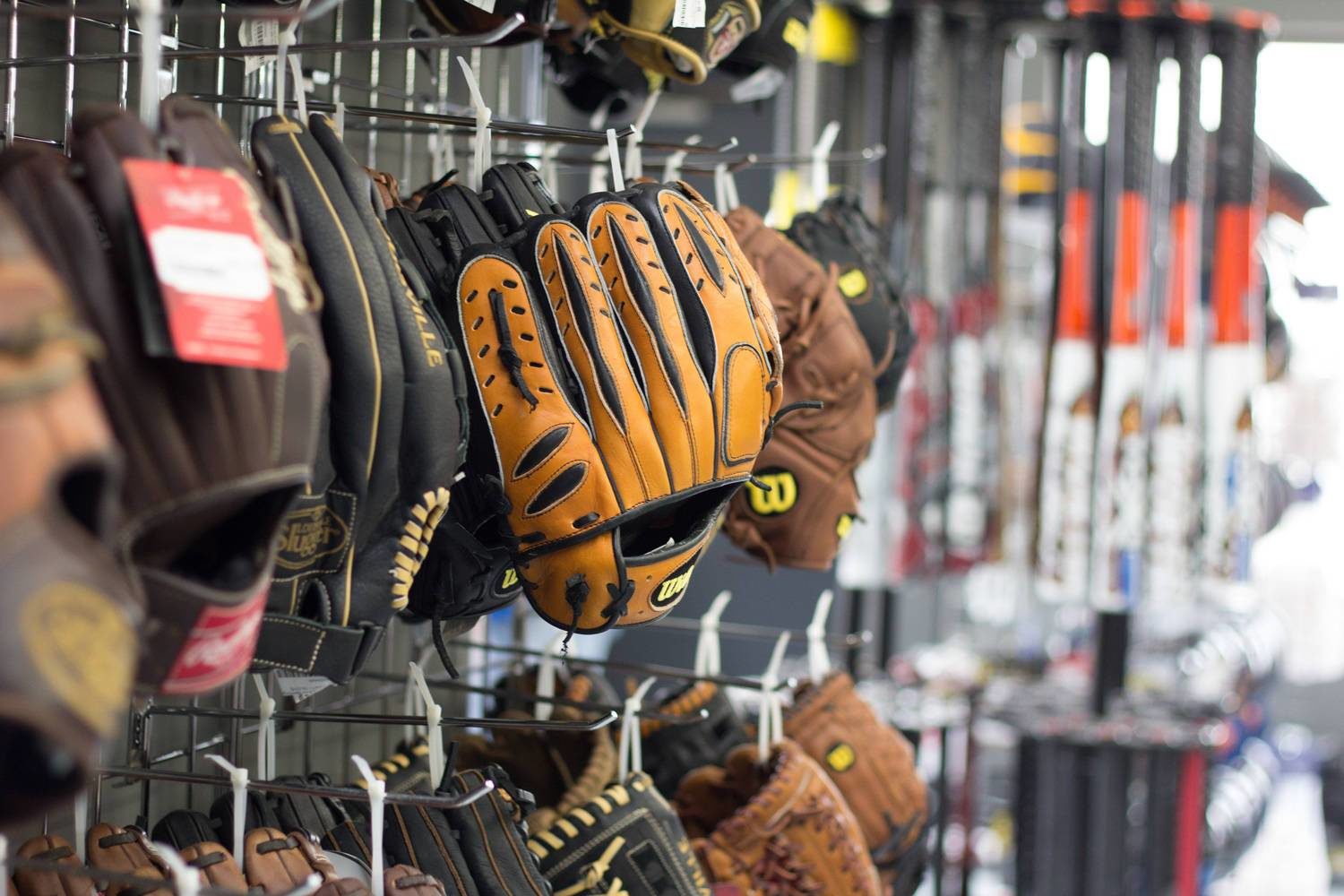
How Sporting Equipment Stores Are Reshaping the Global Market in 2026
- Home / Uncategorized / How Sporting Equipment Stores Are Reshaping the Global Market in 2026
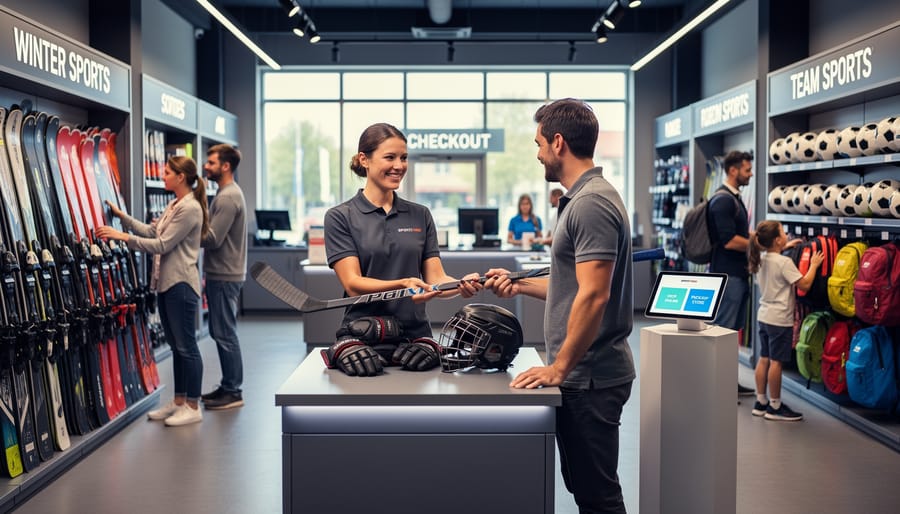
Sporting equipment stores serve as the critical retail connection between manufacturers and end users across the international sporting goods market, functioning simultaneously as distribution channels, community hubs, and specialized consultants for consumers ranging from elite athletes to recreational participants. These retail operations account for a significant portion of the estimated $600 billion global sporting goods industry, operating through physical storefronts, e-commerce platforms, and increasingly, hybrid models that blend both approaches.
The role of sporting equipment stores extends well beyond simple product sales. For facility operators and sports organizations, these retailers provide essential procurement partnerships, offering bulk purchasing arrangements, product expertise, and vendor-managed inventory solutions that streamline equipment acquisition. In Canada, where winter sports and outdoor recreation drive distinct seasonal demand patterns, specialized sporting equipment stores often differentiate themselves through category expertise, such as hockey specialists in prairie provinces or ski and snowboard retailers in mountain regions.
Understanding how these retail operations function within the broader market ecosystem matters for multiple stakeholders. Organizations seeking reliable equipment suppliers need to evaluate factors beyond price, including technical knowledge, after-sales service, and the ability to support specific sports programming. Industry professionals analyzing market trends must account for the transformation underway as traditional brick-and-mortar retailers compete with online-only competitors and direct-to-consumer brands. Potential store operators face questions about market positioning, inventory management, and the technology infrastructure required to compete effectively in 2026.
The sporting equipment retail landscape has undergone substantial shifts in recent years. Digital integration, changing consumer expectations, and supply chain pressures have reshaped how successful stores operate, making strategic decisions about location, specialization, and service offerings more consequential than ever.
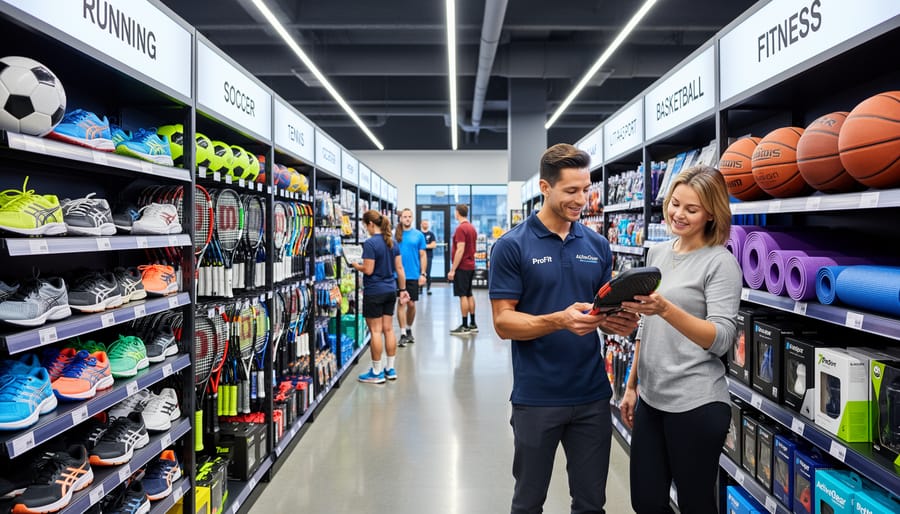
The global sporting equipment retail sector operates as a complex, multi-tiered ecosystem valued at over $170 billion, with sporting goods market growth projected to continue through 2026 at a compound annual rate exceeding 5%. This landscape encompasses everything from single-location specialty shops focused on niche sports to multinational chains serving millions of customers across continents. The market’s structure reflects regional sporting cultures, economic development patterns, and evolving consumer expectations about how they purchase athletic gear.
North America and Europe remain the largest markets by revenue, though Asia-Pacific shows the fastest expansion driven by rising middle-class participation in organized sports and fitness activities. Retail formats vary significantly by region: European markets tend toward specialized boutiques serving specific sports communities, while North American consumers encounter a mix of category killers like Dick’s Sporting Goods, regional chains, and independent stores. In Canada specifically, the landscape includes homegrown retailers alongside American big-box operations, with stores adapting offerings to reflect hockey’s dominance, seasonal outdoor sports demand, and bilingual service requirements in Quebec and other francophone areas.
The coexistence of multiple retail models creates a dynamic competitive environment. Specialty stores carve out niches by offering expert knowledge and deep product selection in golf, cycling, running, or team sports. Big-box retailers leverage economies of scale to offer broader inventory at competitive prices, often becoming one-stop destinations for families outfitting multiple sports. Online platforms have captured significant share by offering convenience and price comparison, while hybrid models attempt to blend physical showrooms with digital fulfillment networks.
| Store Type | Typical Inventory Focus | Target Customer | Market Positioning |
|---|---|---|---|
| Specialty Stores | Deep selection in one or two sports (e.g., golf, cycling) | Serious participants, enthusiasts seeking expertise | Premium service, expert fitting, community hub |
| Big-Box Retailers | Wide range across multiple sports and price points | Families, recreational athletes, budget-conscious buyers | Convenience, value, one-stop shopping |
| Online-Only Platforms | Vast catalog with long-tail products | Price-sensitive shoppers, comparison buyers | Lowest prices, maximum selection, home delivery |
| Hybrid Models | Curated physical inventory plus extended online catalog | Customers wanting to see products before buying | Experience plus convenience, click-and-collect |
This fragmented structure creates opportunities for stores that understand their positioning. The secondhand equipment segment represents another layer, with reshaping the market dynamics by addressing affordability concerns and sustainability values among younger consumers. Institutional buyers, schools, recreation departments, facility operators, often work directly with distributors or specialized commercial divisions that operate parallel to consumer-facing retail networks, adding complexity to the overall market structure.
The choice between specialization and generalization represents a fundamental strategic decision that shapes every aspect of a sporting equipment store’s operations. Specialty retailers focusing on golf, for instance, can stock hundreds of club variations, offer professional fitting services, and employ staff with deep expertise in swing mechanics and course conditions. This depth creates a destination experience that draws serious enthusiasts willing to travel and pay premium prices for personalized guidance.
Basketball specialty stores follow a similar model, curating extensive footwear collections, training equipment, and performance apparel while building relationships with local leagues and schools. Their staff can discuss court surface compatibility, ankle support technologies, and position-specific gear requirements, knowledge that generalist retailers rarely match.
Multi-sport outlets take the opposite approach, betting on convenience and breadth. A facility operator outfitting multiple sports programs can source everything from volleyball nets to hockey goals under one roof, simplifying procurement and vendor management. These stores compete on selection variety, competitive pricing through volume purchasing, and one-stop efficiency rather than deep expertise in any single category.
The decision depends heavily on market density and competitive positioning. Specialty stores thrive in larger urban markets with sufficient customer bases to support niche focus, while smaller communities often require the broader inventory approach. Some successful retailers split the difference, maintaining general inventory while designating staff specialists and creating in-store “shops” for their strongest categories, capturing both convenience shoppers and dedicated enthusiasts.
Institutional buyers face a fundamentally different challenge than individual consumers: they need comprehensive solutions, not just products off a shelf. The stores that win contracts with schools, municipal recreation departments, and sports complexes understand this distinction and build their business model accordingly.
Installation services transform a transactional relationship into a partnership. When a facility manager needs new bleachers, the question isn’t simply “what do you sell?” but “can you handle site assessment, delivery logistics, installation, and post-installation inspection?” Stores offering turnkey solutions eliminate the headache of coordinating multiple contractors. A single point of accountability matters enormously when project timelines are tight and budgets are fixed.
Artificial turf supply represents another area where service capabilities separate serious players from product pushers. Specification matters, drainage requirements, pile height, infill options, and institutional buyers expect suppliers to guide these decisions based on actual usage patterns and climate conditions. The best stores employ specialists who can evaluate existing subgrades, recommend preparation work, and coordinate installation crews familiar with synthetic surfaces. They stand behind the product for years, not just until the invoice clears.
Facility consulting extends this service layer even further. Some stores position staff as advisors who help plan entire facility upgrades, suggesting equipment configurations that maximize space utilization or meet specific program needs. For a municipal government planning a new community centre, this expertise proves invaluable. Rather than piecing together requirements from disparate vendors, they work with one knowledgeable partner who understands both products and real-world operational constraints.
This service infrastructure requires significant investment, trained technicians, installation equipment, project management systems, but it creates sustainable competitive advantages that pure e-commerce models cannot easily replicate.
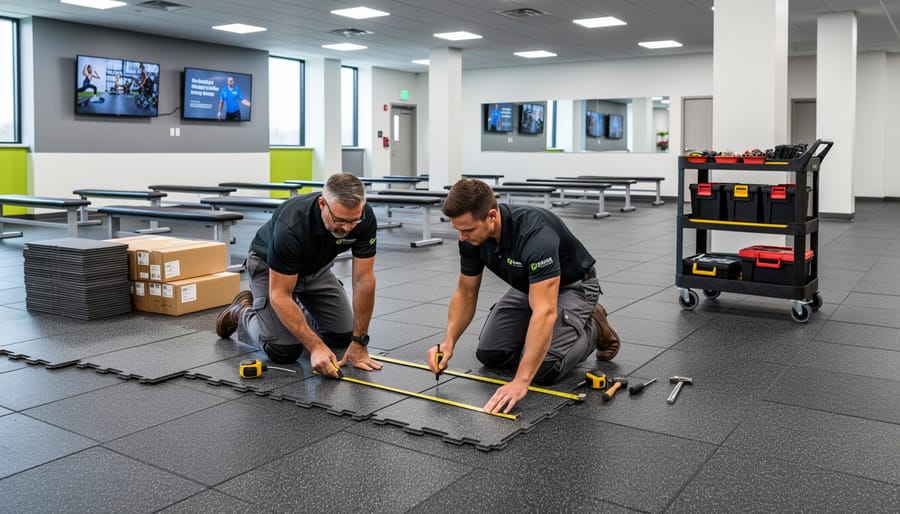
Sporting equipment stores must navigate a complex ecosystem where a recreational basketball player, a municipal recreation department, and a professional sports facility all walk through the same door, or visit the same website, with vastly different expectations and budgets.
Individual Consumers: The Volume Base
Individual athletes and enthusiasts form the broadest segment, purchasing everything from running shoes to tennis rackets. These buyers prioritize immediate availability, competitive pricing, and hands-on product testing. They’re increasingly cost-conscious, with many seeking 2nd hand sporting equipment as a budget-friendly alternative to new gear. Successful stores serve this segment through knowledgeable staff who can explain technical features, generous return policies, and loyalty programs that reward repeat purchases. The relationship here is transactional yet personal, a well-timed recommendation or proper fitting builds trust that converts one-time buyers into long-term customers.
Understanding Core Customer Groups
Institutional Buyers: Complexity and Scale
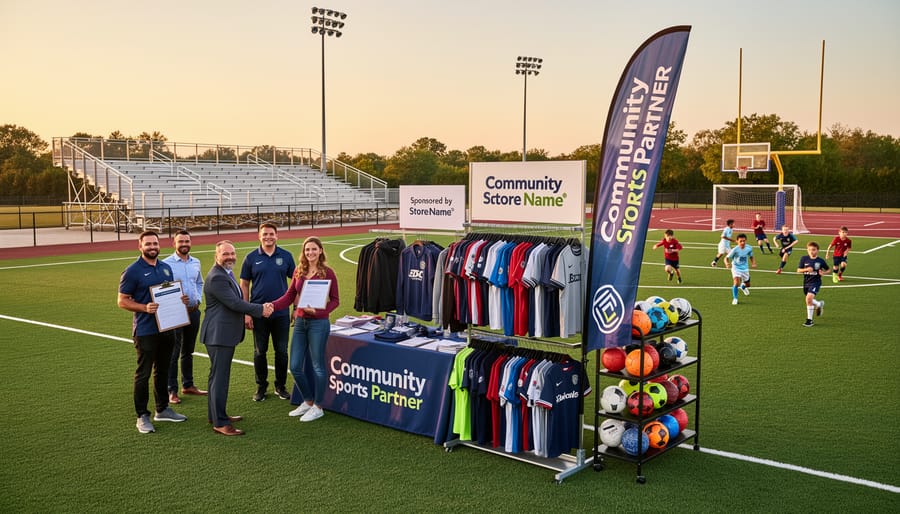
Sports organizations and facility operators represent higher-value transactions but demand different relationship dynamics. A club ordering 30 hockey sticks needs volume pricing and guarantees that mid-season reorders will match the original specification. Facility operators investing in bleacher systems or artificial turf aren’t just buying products, they’re selecting long-term partners who’ll handle installation, maintenance training, and warranty claims years down the line.
Municipal governments add another layer: formal RFP processes, compliance requirements, and decision timelines that stretch across budget cycles. Smart stores assign dedicated account representatives to these clients, understanding that winning a municipal contract for playground surfacing or arena equipment might take 18 months but could mean decades of service revenue.
The most effective stores segment their approach operationally, maintaining consumer-friendly showrooms while offering institutional clients private consultations, custom quotes, and project management support that acknowledges their unique constraints and approval hierarchies.
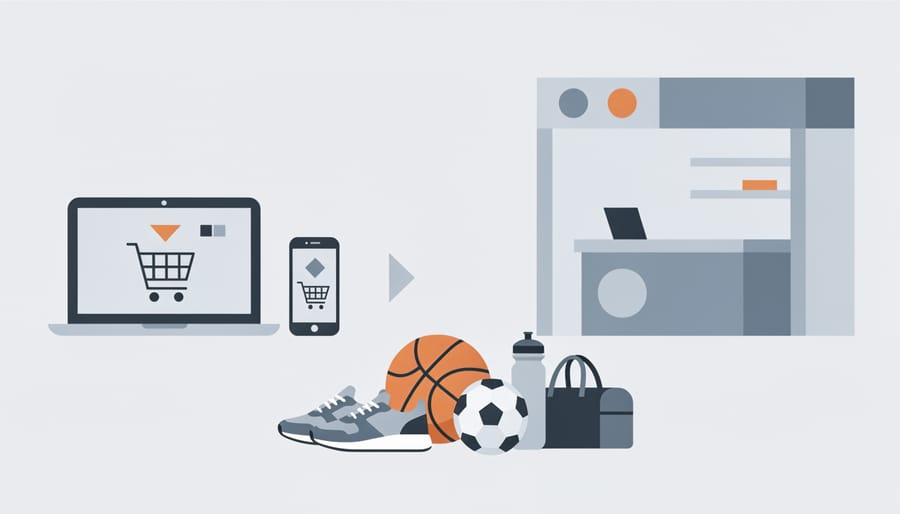
The physical sporting equipment store is not disappearing; it is evolving into something more versatile. Retailers who once relied solely on foot traffic now operate as hybrid businesses, blending digital convenience with the tactile advantages of in-person shopping. This shift reflects a pragmatic response to consumer behavior: shoppers research online but often want to touch a basketball, test a putter’s weight, or consult staff before committing to major purchases like bleachers or turf systems.
Click-and-collect services have become standard infrastructure. Customers browse inventory online, reserve items, and pick them up within hours, skipping both shipping delays and the friction of wandering aisles. For facility operators ordering bulk equipment or time-sensitive tournament supplies, this eliminates uncertainty. The store becomes a logistics hub rather than just a showroom.
Digital showrooms extend this model further. Some retailers now use their floor space to display flagship products while maintaining deeper inventory in warehouses, with tablets or kiosks allowing customers to explore additional options, check real-time stock, and place orders on the spot. A golf specialty store might showcase three putter models physically while offering 30 variants digitally, combining the efficiency of e-commerce with immediate expert guidance.
Content marketing plays a subtler but strategic role in this transformation. Stores that publish articles on topics like performance optimization, injury prevention, or emerging trends (including debates around CBD in sports) position themselves as knowledge sources, not just vendors. This builds trust with athletes, coaches, and facility managers who return to the site for information and, eventually, for purchases. The content draws traffic; the hybrid model converts it.
Virtual consultations have grown particularly valuable for institutional buyers. A municipal procurement officer can video-conference with a store’s bleacher installation specialist, review 3D renderings of proposed setups, and finalize specifications without traveling. The physical location still matters for final inspections or material verification, but digital tools compress timelines and broaden geographic reach.
What separates thriving hybrid stores from struggling ones is integration. The online experience must reflect in-store inventory accurately, staff need training on both digital tools and product knowledge, and fulfillment systems must handle same-day pickups as smoothly as shipping. Stores that treat digital and physical channels as competing priorities rather than complementary assets leave revenue on the table. Those that unify them create resilience against purely online competitors who cannot offer immediate product access or hands-on expertise.
Running a sporting equipment store in 2026 means managing a complex web of international suppliers while balancing the feast-or-famine nature of seasonal demand. Stores typically source from manufacturers across Asia, Europe, and North America, each region offering different cost structures, lead times, and quality tiers. The challenge isn’t just finding suppliers, it’s coordinating shipments, currency fluctuations, and customs requirements while maintaining cash flow and shelf space.
Inventory planning has become more sophisticated out of necessity. Hockey equipment peaks in late summer, while golf and baseball gear moves fastest in spring. Smart retailers use historical sales data and weather forecasting to predict demand cycles, but they’re also building buffer stock for core items after experiencing the disruptions of recent years. Many have shifted from just-in-time models to carrying slightly deeper inventory on essentials, accepting higher holding costs as insurance against stockouts.
Storage space directly impacts what stores can carry and when. Bulky items like goals, nets, and seasonal equipment require considerable square footage. Retailers often implement vertical storage systems and climate-controlled areas for temperature-sensitive products like synthetic materials and adhesives. Off-season items get rotated to less accessible zones, while trending products stay front and center.
The supply chain volatility of recent years has pushed many stores to diversify their supplier base and reconsider their product mix. Some have started accepting trade-ins or expanded programs where customers can buy used equipment reducing dependence on new inventory from overseas manufacturers. Others have partnered with regional distributors who can respond faster than direct imports. The stores that weather disruptions best maintain strong supplier relationships, carry strategic safety stock, and stay flexible enough to pivot when containers get delayed or costs spike unexpectedly.
Canada’s sporting equipment retail landscape operates under distinct pressures that shape how stores approach inventory, customer service, and market positioning. Geography and climate drive fundamental differences in purchasing patterns across the country, with winter sports equipment dominating demand for six months in many regions while creating seasonal cash flow challenges that stores must navigate carefully.
The country’s vast distances mean that sporting equipment stores in smaller cities often function as critical regional hubs, serving customers across hundreds of kilometres who have limited alternatives. This creates opportunities for stores that invest in comprehensive inventory and knowledgeable staff, but also exposes them to competition from cross-border online retailers offering lower prices without the overhead of physical locations. Canadian stores counter this by emphasizing immediate availability, expert fitting services, and warranty support that distant suppliers can’t match.
Bilingual service requirements in provinces like Quebec, Ontario, and New Brunswick add operational complexity that international chains sometimes underestimate. Successful stores employ staff fluent in both official languages and maintain product information, signage, and customer communications in English and French, a differentiator that builds trust with francophone customers and municipal procurement offices.
Municipal and provincial government partnerships represent a significant revenue stream for Canadian sporting equipment stores, particularly those offering infrastructure services. Schools, community centres, and recreation departments purchasing everything from basketball hoops to artificial turf installations prefer local suppliers who understand Canadian safety standards, can deliver quickly, and provide ongoing maintenance support. These institutional relationships often prove more stable than consumer retail during economic downturns.
The growing market for used sports gear has created both opportunities and challenges for traditional retailers, as budget-conscious families seek alternatives to new equipment while stores explore trade-in programs and consignment models to capture this demand.
When selecting an equipment supplier for your facility, you’re not just buying products, you’re choosing a partner who will influence your operations, budget, and user experience for years to come. The decision demands careful evaluation across multiple dimensions, particularly for large-scale projects where mistakes prove costly and disruptive.
Start with product quality and range. The supplier should stock reputable brands with proven durability records, but also demonstrate knowledge of when premium options make sense versus when mid-tier products suffice. Ask about their experience with projects similar to yours: a supplier who regularly equips basketball courts understands hardwood floor specifications and hoop standards, while one serving golf facilities knows turf systems and maintenance requirements. They should also offer access to cost-effective inventory options when appropriate, particularly for training equipment or non-critical items where gently used alternatives deliver adequate performance at significant savings.
Service capabilities matter as much as product selection. Can the supplier handle installation, or will you need to coordinate separate contractors? Do they provide site assessments before quoting to ensure proper specifications? For complex infrastructure like bleacher systems or artificial turf, installation expertise prevents problems that emerge months after purchase. The best partners offer training for your staff on equipment maintenance and minor repairs, extending asset life and reducing long-term costs.
Warranty terms and after-sales support reveal how suppliers handle inevitable issues. Standard manufacturer warranties are baseline; look for suppliers who stand behind products with their own service guarantees. Response time for warranty claims matters, will they send a technician within days or weeks? Do they stock common replacement parts locally, or will you wait for international shipping? For facility operators in remote areas, this becomes critical.
Delivery timelines require honest assessment. Suppliers who consistently meet promised dates demonstrate operational competence and reliable vendor relationships. Request references from recent projects of comparable scope, then contact those facilities to verify delivery performance. Seasonal demand spikes affect availability, so suppliers should communicate constraints upfront rather than overpromising.
Finally, evaluate partnership potential beyond the initial transaction. The supplier’s willingness to work within your budget cycles, provide flexible payment terms for large orders, and maintain communication between purchases indicates whether they view you as a valued client or a one-time sale. Multi-year relationships with equipment partners streamline procurement, build institutional knowledge, and often unlock preferred pricing as trust develops.
The sporting equipment store of 2026 bears little resemblance to the transactional retail outlets of decades past. These businesses have transformed into multifaceted service providers that bridge the gap between individual athletic aspirations and institutional infrastructure needs. Whether outfitting a weekend golfer or installing bleacher systems for a municipal sports complex, successful stores now position themselves as partners rather than vendors.
This evolution reflects broader shifts in the International Sporting Equipment Market. Customers demand expertise, not just inventory. They expect digital convenience alongside hands-on consultation. Organizations seek suppliers who understand facility management challenges, seasonal demand patterns, and the technical specifications that separate adequate equipment from optimal performance.
The stores thriving in this landscape recognize that their value extends beyond the products on their shelves. They invest in staff training, build relationships with sports organizations, maintain installation capabilities, and create content that educates their market. They understand regional nuances, from Canada’s bilingual requirements to climate-driven demand cycles, while leveraging global supply networks.
Looking ahead, continued success depends on balancing these dual roles: serving individual athletes with personalized expertise while managing complex procurement for large-scale projects. The stores that master this hybrid model will define the next chapter of sporting equipment retail, shaping how athletes train, how facilities operate, and how communities engage with sport.