Why 2nd Hand Sporting Equipment Is Reshaping the International Market
- Home / Uncategorized / Why 2nd Hand Sporting Equipment Is Reshaping the International Market
The global market for 2nd hand sporting equipment has matured into a sophisticated sector worth billions, driven by facility operators seeking cost-effective solutions and organizations prioritizing sustainability. Purchasing pre-owned equipment now represents a strategic procurement decision rather than a budget compromise, with quality refurbished items often performing comparably to new alternatives at 40-70% lower costs.
Facility managers and procurement professionals face a complex landscape when evaluating used sporting goods. The decision extends beyond simple price comparisons. You need to assess remaining product lifespan, warranty availability, safety certifications, and supplier reliability. International sourcing adds layers of complexity, from shipping logistics to varying quality standards across regions.
The benefits are compelling. Municipal recreation departments across Canada report saving $50,000 to $200,000 annually by incorporating refurbished equipment into their procurement strategies. Sports organizations reduce their environmental footprint significantly, with each piece of reused equipment preventing manufacturing emissions and material waste. Athletes and smaller clubs gain access to professional-grade gear previously out of reach.
However, the market lacks standardization. Unlike new equipment with manufacturer specifications and warranties, secondhand purchases require specialized evaluation skills. What passes for acceptable wear in one jurisdiction might fail safety standards in another. Sourcing channels range from reputable refurbishment companies to auction liquidations, each with distinct risk profiles and quality assurance processes.
This guide addresses the critical questions facing international buyers in 2026. Which equipment categories offer the best value proposition when purchased used? How do you verify structural integrity and remaining service life? What red flags indicate a problematic purchase? Where do professional buyers source inventory reliably?
Understanding these fundamentals transforms secondhand equipment procurement from a gamble into a calculated advantage, delivering measurable financial and environmental returns while maintaining the safety and performance standards your facility demands.
Municipal recreation departments and facility operators face mounting pressure to deliver quality programs while managing stagnant or shrinking budgets. Pre-owned equipment offers a practical solution: organizations can acquire professional-grade gear at 40-70% below retail, redirecting savings toward facility maintenance, staff training, or program expansion.
Consider a mid-sized Canadian municipality outfitting a new community fitness center. Purchasing refurbished cardio machines, weight equipment, and basketball infrastructure second-hand rather than new can reduce capital costs by $80,000-$150,000 for a modest facility. These savings accumulate quickly when equipping multiple sites or replacing aging inventory across parks and recreation networks.
The quality trade-off is often minimal. Commercial-grade sporting equipment from reputable manufacturers typically outlasts consumer models even when purchased used. A five-year-old treadmill from a closing gym may deliver another 8-10 years of service with proper maintenance, while a brand-new budget model might fail within three years. Facilities prioritize durability over newness.
Procurement officers increasingly write second-hand options into RFPs, specifying acceptable age limits, refurbishment standards, and warranty requirements. This approach legitimizes used equipment purchases within government purchasing frameworks while maintaining accountability. Some organizations now allocate 30-40% of their annual equipment budget specifically to pre-owned acquisitions, treating it as strategic sourcing rather than compromise.
The model works because facility equipment operates in controlled environments with professional oversight, making condition assessment and lifecycle management straightforward compared to consumer purchases.
Canadian buyers have embraced pre-owned sporting goods at unprecedented rates since 2024, with market data showing 43 percent growth in second-hand purchases across golf, basketball, and adult fitness categories. Economic pressures, including a 6.2 percent increase in new equipment costs, have accelerated this shift. Middle-income households now allocate 31 percent of their sports equipment budgets to used items, up from 19 percent three years ago.
Golf equipment dominates the Canadian second-hand market, representing 38 percent of all used sports gear transactions. Buyers actively seek recent-model drivers, irons, and golf carts that retain 60 to 75 percent of their original performance at 40 to 50 percent of retail prices. Basketball equipment purchases, particularly portable hoops and training aids, have increased 27 percent among youth programs and municipal facilities upgrading aging infrastructure.
International markets mirror these patterns, with European buyers showing similar preferences for premium used equipment. Australian and New Zealand markets demonstrate particularly strong demand for adult fitness equipment, where commercial-grade treadmills and weight machines command consistent resale values. Asian markets, especially Japan and South Korea, emphasize certification and refurbishment documentation, creating opportunities for Canadian sellers who maintain detailed equipment histories.
The demographic profile of second-hand buyers has shifted noticeably: 54 percent are now aged 35 to 55, facility managers or program coordinators making bulk purchases rather than individual consumers. This professional buyer segment prioritizes durability verification and supplier reliability over lowest-price options, reshaping how vendors position their inventory.
Examining pre-owned sports equipment requires a methodical approach to avoid costly mistakes. Start with a visual inspection under good lighting, checking for cracks, deep scratches, rust, or corrosion on metal components. These defects compromise both safety and performance, particularly in load-bearing equipment like weight machines or basketball hoops.
Test all moving parts. Hinges, adjustment mechanisms, and joints should operate smoothly without grinding or excessive play. For equipment with wheels or casters, ensure they roll freely and lock securely. Any stiffness or wobbling indicates worn bearings that will require replacement.
Check wear patterns on contact surfaces. Excessive wear on basketball rims, frayed netting, or uneven wear on fitness equipment pads suggests heavy use that may have shortened the item’s remaining lifespan. Golf club faces should show consistent wear patterns; asymmetrical grooves or deep ball marks signal improper use or potential structural weakness.
Verify that safety features remain intact. Padding should be dense and tear-free, not compressed or crumbling. Weight machine cables must be free of fraying, and all safety pins or locks should engage properly. Missing guards, worn grips, or damaged emergency stops are red flags.
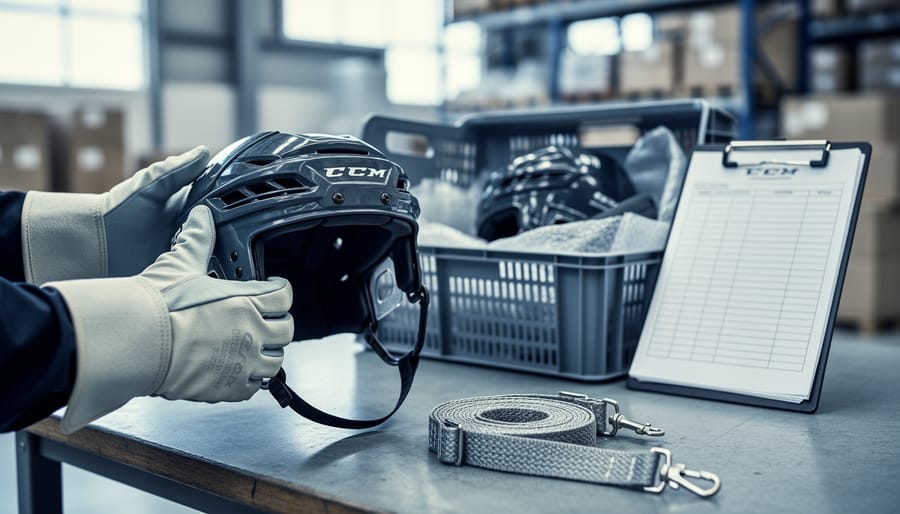
For electronic equipment like treadmills or digital scoreboards, test all functions before committing. Request documentation of the equipment’s age, maintenance history, and any repairs. Original manuals and proof of past professional servicing add significant value and confidence to your purchase decision.
The second-hand sporting equipment market has matured significantly, with several manufacturers and retailers now offering structured refurbishment programs that rival new product warranties. These programs typically involve professional technicians who strip down, inspect, and restore equipment to specific performance standards before resale. Major brands like Life Fitness and Precor have established certified pre-owned programs for cardio and strength equipment, covering parts and labor for 90 days to one year. Some refurbishers extend warranties up to three years on select items, particularly commercial-grade machines.
Third-party certification adds another layer of buyer confidence. Organizations such as the International Health, Racquet & Sportsclub Association (IHRSA) have developed standards for evaluating used fitness equipment condition. Independent inspectors assess structural integrity, mechanical function, and safety compliance, issuing certificates that detail the equipment’s grade (often A through D). These certifications help facilities compare offerings across suppliers and justify purchases to stakeholders who might question pre-owned quality.
In Canada, warranty coverage varies substantially. Provincial consumer protection laws generally don’t extend to person-to-person used sales, but commercial dealers must honor any warranties they advertise. Smart buyers request written warranty terms before finalizing purchases. Look for coverage that includes shipping, labor, and parts, not just parts alone. Some specialty dealers offer buy-back guarantees, allowing organizations to return equipment within 30 to 60 days if it doesn’t meet expectations.
For high-value items like golf carts or commercial basketball hoops, consider purchasing extended service contracts. These typically cost 8 to 15 percent of the purchase price but can prevent expensive repairs on complex equipment. Always verify what’s excluded; cosmetic issues and normal wear rarely qualify for coverage.
Purchasing second-hand sporting equipment fundamentally changes the environmental calculus of outfitting a facility or supporting an athletic program. Every piece of used gear extends the functional life of materials already extracted, manufactured, and transported. This eliminates the resource-intensive processes required to produce new items, from raw material extraction through factory production to international shipping networks.
Manufacturing new sports equipment consumes substantial energy and water while generating emissions across global supply chains. A single set of golf clubs, for instance, requires metal extraction, forging, composite material production, and assembly across multiple facilities before reaching a retailer. By choosing pre-owned equipment, organizations bypass this entire manufacturing cycle. The carbon footprint drops to transportation from the previous owner and any refurbishment work, typically reducing overall emissions by 70-85% compared to purchasing new.
Material waste represents another critical consideration. Sports equipment production generates manufacturing offcuts, packaging waste, and defective units that never reach consumers. The industry produces millions of tons of plastic, synthetic materials, and metal waste annually. When facilities purchase used basketball hoops, fitness machines, or golf carts instead of new ones, they directly prevent demand for virgin materials and the waste streams accompanying their production.
Canadian organizations increasingly recognize these environmental benefits align with broader sustainability mandates. Municipal recreation departments facing climate action commitments find that sourcing second-hand equipment contributes measurable progress toward emissions reduction targets without sacrificing program quality. Private facilities pursuing green building certifications or ESG (Environmental, Social, and Governance) reporting can document the lifecycle impact avoided through strategic used equipment procurement.
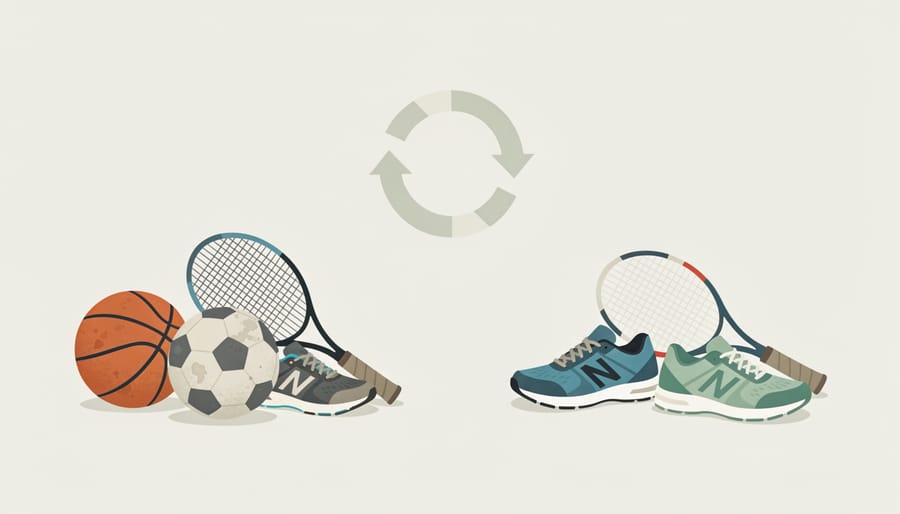
The circular economy model transforms sports equipment from a linear “take-make-dispose” pattern into a system where products circulate longer before end-of-life recycling. This approach resonates particularly well in international markets where resource scarcity and environmental regulations drive procurement decisions. Organizations purchasing refurbished equipment support an ecosystem of repair, refurbishment, and resale businesses that create jobs while reducing environmental strain.
Water consumption offers another sustainability dimension. Manufacturing synthetic materials and metal components for new sports equipment requires extensive water use during production and finishing processes. By extending equipment life through resale markets, facilities indirectly conserve thousands of liters of water per major purchase, a consideration that matters increasingly in regions facing water stress.
Online platforms dedicated to verified second-hand sports equipment have evolved significantly, offering Canadian and international buyers structured marketplaces with inspection protocols, buyer protection policies, and transparent pricing. Play It Again Sports operates both physical locations and an integrated online inventory system across North America, enabling facilities to browse certified used equipment with condition ratings and return guarantees. Their refurbishment standards and multi-location network provide procurement professionals with consistent quality benchmarks.
SidelineSwap has emerged as a specialized platform connecting individual sellers with organizational buyers, featuring authentication services for higher-value items like golf clubs and fitness machines. The platform’s buyer protection program includes condition verification, secure payment processing, and dispute resolution, critical features for municipal purchasing departments managing accountability requirements.
Global marketplaces like eBay have introduced dedicated sporting goods authentication programs for premium categories, while Facebook Marketplace now offers commercial seller verification badges. Canadian organizations should prioritize platforms with detailed condition photography, equipment specifications matching manufacturer standards, and clear return windows. Look for sellers offering professional inspections, maintenance records, and original documentation when available.
Specialized platforms like Golf Avenue focus exclusively on golf equipment, providing swing-weight specifications and club-face analysis that generalist marketplaces cannot match. Similarly, platforms serving basketball facilities often include installation support networks and compatibility verification for court systems. When evaluating platforms, confirm shipping insurance coverage, verify the seller’s refund policy alignment with your organization’s procurement timelines, and check whether bulk purchase discounts apply for facility-wide equipment upgrades.
Organizations seeking bulk purchases or specialized equipment often benefit from establishing relationships with professional dealers who focus exclusively on the second-hand sports market. These specialists offer advantages beyond typical online marketplaces, including thorough equipment inspections, refurbishment services, and volume discounting for institutional buyers.
Reputable liquidators maintain inventories from facility closures, equipment upgrades, and lease returns. They typically provide condition reports, maintenance histories when available, and may offer delivery and installation services. Many specialize in specific categories, some focus on fitness center liquidations, others on golf course equipment or municipal recreation gear. This specialization means they understand the technical requirements and safety standards relevant to Canadian facilities and international organizations.
When vetting potential partners, request references from similar organizations, ask about their refurbishment processes, and clarify warranty terms. Established dealers often provide trial periods or performance guarantees that reduce procurement risk. Some offer trade-in programs, allowing facilities to offset new purchases with credit for outgoing equipment.
Professional dealers also navigate logistics complexities, particularly for cross-border transactions involving Canadian buyers. They handle documentation, customs requirements, and freight coordination that individual sellers cannot provide. For organizations planning major equipment acquisitions or facility renovations, building partnerships with two or three trusted liquidators creates a reliable pipeline of quality second-hand options while ensuring competitive pricing and consistent service standards.
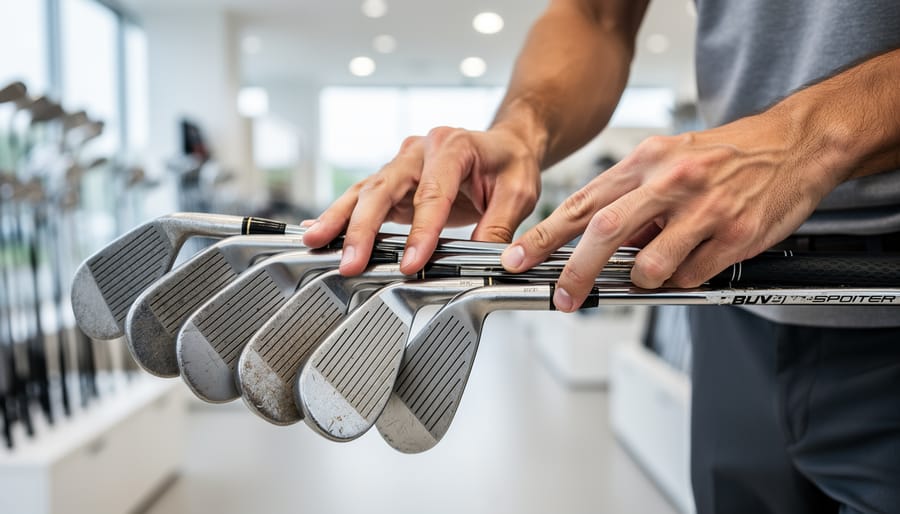
When evaluating 2nd hand sporting equipment for golf, focus first on club condition. Inspect the clubface for deep scratches, dents, or worn grooves that affect ball spin and control. Check shaft integrity for bends, cracks, or loose connections at the hosel. Grips should show minimal wear; budget for replacement if they’re slick or hardened, as new grips cost $5-15 per club.
For golf carts, battery condition determines value and usability. Electric cart batteries typically last 4-6 years; ask for age, charge capacity, and maintenance records. Test drive to verify smooth acceleration, braking, and steering response. Gas-powered carts should start easily and run without stalling or excessive exhaust.
Range equipment like ball dispensers, mats, and netting faces heavy use. Check mat backing for separation and hitting surface for excessive divots. Inspect netting for tears, frayed edges, or UV degradation. Ball washers and picker-uppers need functional mechanisms; replacement parts for these accessories are often expensive, so confirm everything operates before purchase.
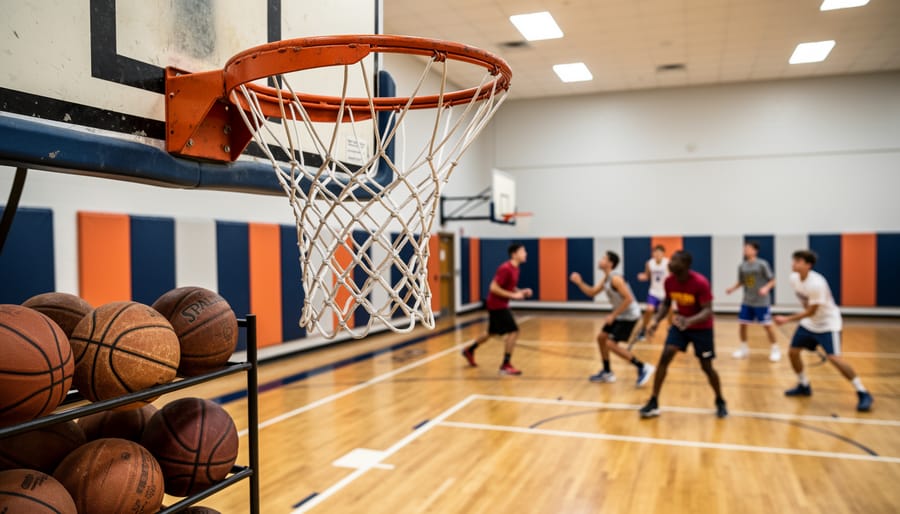
When purchasing pre-owned basketball infrastructure, portable hoops require careful frame inspection for rust, weld integrity, and base stability. Check hydraulic lift mechanisms for smooth operation and test wheel assemblies on mobile units. Court surfaces present greater complexity: modular tiles should lock securely without warping, while rolled rubber flooring must show minimal wear patterns and no cracking. Inspect seams and edges where trip hazards develop first.
Training equipment like rebounding machines and ball return systems need thorough mechanical testing. Examine pneumatic components, springs, and nets for functionality. Shot trainers and dribbling aids should maintain structural soundness without sharp edges or loose parts. For facility operators, the most critical factor is verifying that weight capacities and safety ratings meet current standards, regardless of the equipment’s age. Request maintenance records when available, as documented upkeep indicates responsible previous ownership.
Flooring represents the largest investment risk in 2nd hand sporting equipment purchases. Surface texture affects player safety and performance, so assess traction consistency across the entire court area. Water damage, uneven settling, and adhesive failure disqualify most used court installations from consideration unless professionally refurbished with documentation.
# Adult Fitness Equipment: Weights, Machines, and Cardio Gear
Pre-owned fitness equipment represents one of the strongest segments in the 2nd hand sporting equipment market, particularly for recreation centers operating under tight budgets. Commercial-grade treadmills, ellipticals, and stationary bikes typically last 10,000-15,000 hours with proper maintenance, making them viable purchases even with documented use. When evaluating cardio machines, test all resistance levels, inspect belt condition and tension, and verify that electronic consoles function properly. Unusual noises, wobbling frames, or hesitation during operation signal costly repairs ahead.
Weight equipment requires different scrutiny. Check cable machines for fraying cables, worn pulleys, and smooth weight stack movement. Inspect Olympic bars for bent shafts by rolling them on a flat surface, even slight warping creates uneven lifts. Free weight plates should show minimal rust and no cracks; surface rust is cosmetic, but deep pitting weakens structural integrity.
For organizations purchasing multiple pieces, request maintenance logs and ask about previous environment, equipment from climate-controlled facilities generally outlasts gear stored in humid basements. Commercial equipment from closing gyms often offers the best value: higher initial quality, documented service history, and bulk pricing that municipal facilities can leverage for complete room setups at 40-60% of new pricing.
Sports facilities and organizations sitting on surplus or retired equipment can recover significant value while supporting the second-hand sporting equipment market they themselves rely on. A strategic approach to offloading used gear turns storage liabilities into revenue opportunities and strengthens relationships within the sports community.
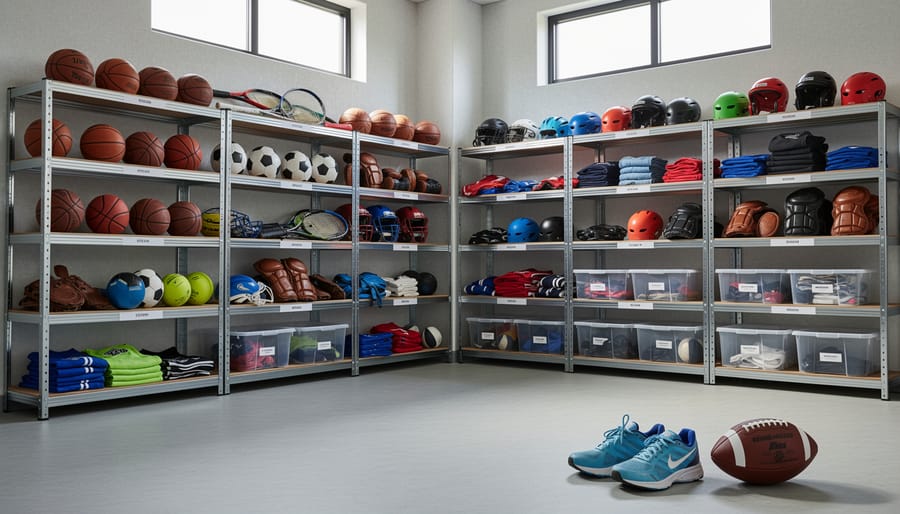
Begin by conducting an honest inventory assessment. Walk through storage areas and identify equipment that no longer serves your programming needs, whether due to upgrades, changing sports offerings, or declining condition. Separate items into three categories: excellent condition with strong resale potential, functional but worn gear suitable for budget buyers or refurbishment, and equipment too damaged for safe resale that requires responsible disposal or recycling.
When preparing equipment for sale, follow this structured approach to maximize returns:
Price competitively but fairly. Most quality 2nd hand sporting equipment sells for thirty to sixty percent of new retail prices, depending on age and condition. Golf equipment and basketball hoops retain value better than heavily-used cardio machines or court flooring.
Consider partnering with refurbishment specialists who can restore equipment to near-new condition in exchange for a revenue split, particularly for commercial fitness machines or facility infrastructure. These partnerships often yield higher returns than selling as-is while ensuring equipment enters the market meeting safety standards. Organizations in Canada increasingly coordinate equipment swaps through provincial sports associations, creating win-win scenarios where one facility’s surplus becomes another’s solution.
The second-hand sporting equipment market now offers Canadian organizations a proven path to meet financial, performance, and environmental objectives simultaneously. Facilities that incorporate pre-owned gear into their procurement strategies typically reduce equipment costs by 30 to 60 percent while maintaining competitive standards, a significant advantage when managing tight municipal budgets or expanding program offerings.
Beyond immediate savings, purchasing used equipment directly supports sustainability mandates that many Canadian sports organizations now face. Each reconditioned item diverts manufacturing waste, extends product lifecycles, and reduces carbon emissions associated with new production. This alignment with circular economy principles strengthens an organization’s environmental credentials while delivering measurable cost benefits.
The international market for 2nd hand sporting equipment continues to mature in 2026, with improved quality controls, transparent sourcing channels, and professional refurbishment services making pre-owned purchases less risky than ever. Digital marketplaces, specialty dealers, and manufacturer trade-in programs now provide verified options backed by inspection reports and limited warranties.
For Canadian buyers, from municipal recreation departments to private fitness centers, the strategic integration of second-hand equipment represents more than cost reduction. It demonstrates responsible stewardship of both financial and environmental resources. Organizations that develop clear evaluation criteria, establish relationships with reputable suppliers, and implement thorough inspection protocols can confidently leverage the used equipment market to achieve operational goals while contributing to a more sustainable sports industry.