15 Essential Basketball Equipment Items Every Facility and Player Needs in 2026
- Home / Uncategorized / 15 Essential Basketball Equipment Items Every Facility and Player Needs in 2026
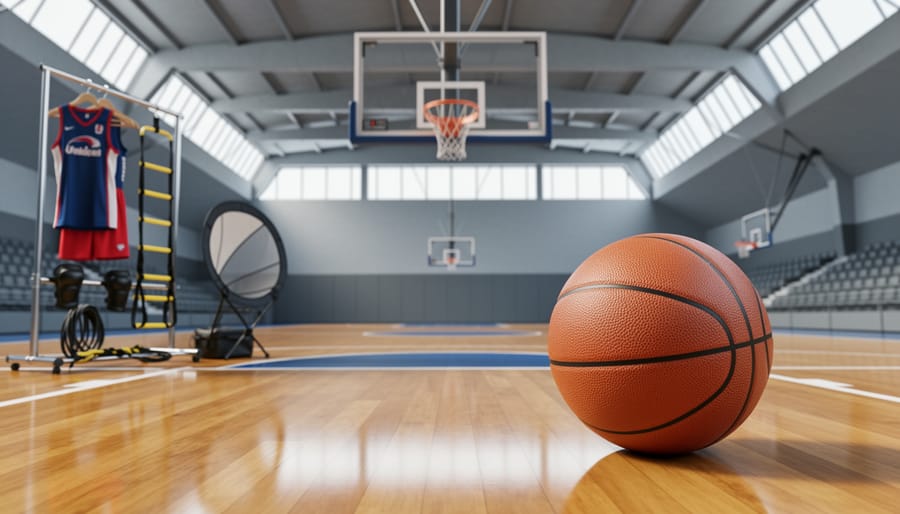
Equipping a basketball facility or team requires 15 distinct categories of gear spanning infrastructure, game equipment, player apparel, and training tools. From regulation hoops and specialized flooring to uniforms, footwear, and performance aids, this comprehensive inventory addresses the needs of facility operators outfitting multi-court gymnasiums, municipal planners budgeting for community sports infrastructure, coaches preparing competitive teams, and individual players determining what they need to participate safely and effectively.
The scope of basketball equipment extends far beyond a ball and net. Facility-level infrastructure includes structural elements like hoops, backboards, flooring systems, shot clocks, and spectator seating that must meet specific safety standards and durability requirements. Player-level gear encompasses balls designed for different age groups and surfaces, footwear engineered for court traction and ankle support, uniforms compliant with league regulations, and protective equipment that reduces injury risk. Training aids such as agility ladders, rebounders, and film analysis tools round out the inventory for programs focused on skill development.
Understanding the technical specifications, regulatory requirements, and quality indicators for each equipment category enables informed purchasing decisions that balance performance standards with budget constraints. This guide provides detailed specifications and selection criteria across all 15 categories, helping Canadian facility operators and international buyers identify equipment that meets their operational needs, whether outfitting a single community court or a professional training complex.
Compiling this list required balancing diverse facility requirements with practical realities facing Canadian operators and players. We filtered hundreds of equipment options through a rigorous methodology that prioritizes both infrastructure investments and player safety.
Our selection criteria included:
Each item earned its place by serving essential functions rather than representing optional upgrades. We evaluated whether the equipment addresses facility operations, athlete performance, or both. Safety certifications carried significant weight, items without proper testing documentation didn’t make the cut, regardless of cost advantages.
The manufacturer dominance of certain brands influenced our quality benchmarks, though we remained objective about alternatives. We also considered equipment store trends affecting availability and pricing in Canadian markets. While some operators explore 2nd-hand equipment for budget relief, this list focuses on new purchases that meet current specifications. Finally, we verified that each item functions effectively across skill levels, from youth programs through competitive adult leagues.
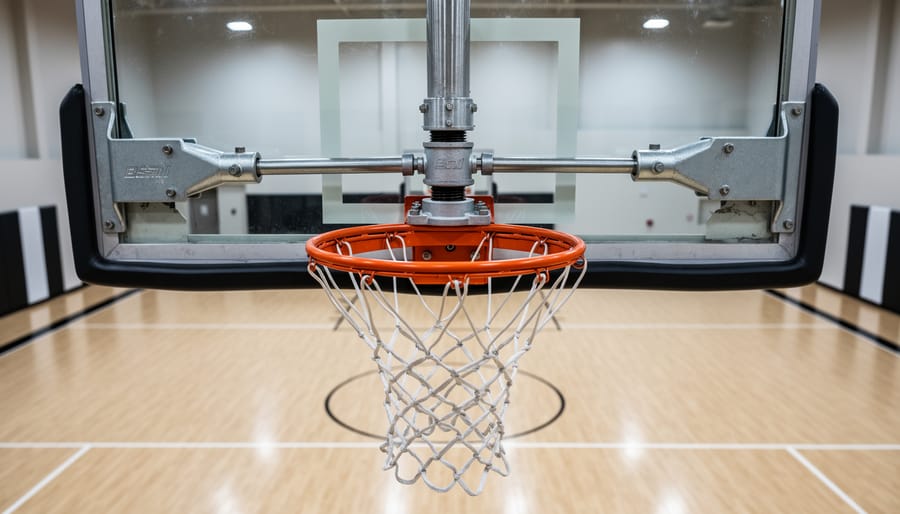
Basketball hoops and rim systems serve as the literal centerpiece of any court, and choosing the right configuration depends on whether you’re outfitting a competitive venue or a practice facility. Regulation hoops must maintain a 10-foot height from the playing surface to the top of the rim, with the rim itself measuring 18 inches in diameter and positioned 6 inches from the backboard face.
Breakaway rim mechanisms are critical for player safety in competitive settings, allowing the rim to flex downward under force and return to position, which reduces injury risk during dunks and protects the backboard structure. Look for rims with spring-loaded or compression designs rated for repeated impact and certified to meet basketball standards. Fixed rims, while less expensive, work adequately for youth programs or low-intensity practice courts where slam dunks are infrequent.
Mounting options significantly affect installation costs and versatility. In-ground systems provide maximum stability for outdoor courts, requiring concrete footings that extend below frost lines in Canadian climates. Wall-mounted configurations save floor space in gymnasiums with sufficient structural support, while portable bases filled with water or sand offer flexibility for multi-use facilities but sacrifice some stability during aggressive play. Height-adjustment mechanisms range from crank handles to pneumatic systems, with the latter allowing quick transitions between youth and adult play heights. Backboard attachment hardware should use corrosion-resistant bolts and reinforced brackets, particularly for outdoor installations exposed to temperature swings and moisture.
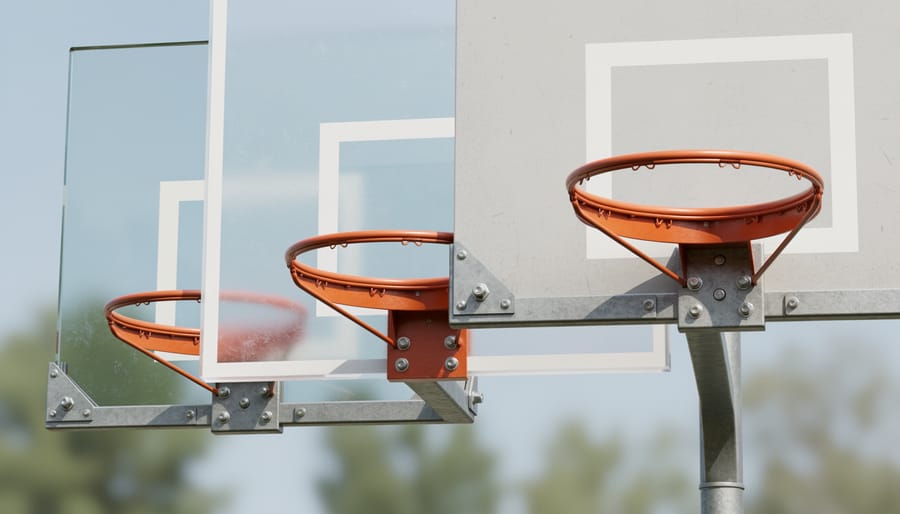
Backboard selection significantly impacts player performance and facility durability. The four primary materials each serve distinct use cases based on budget, intended skill level, and installation environment.
Tempered glass backboards deliver professional-grade performance with superior rebound characteristics that meet regulation standards. Measuring 72″ wide by 42″ high with a ½-inch thickness, these backboards provide the truest ball response and are mandatory for competitive facilities. Their weight, ranging from 150 to 200 pounds, requires robust mounting systems with steel framework and support bracing rated for dynamic loading.
Acrylic backboards offer excellent rebound quality at a more accessible price point. Available in regulation sizes or scaled-down 60″ x 36″ dimensions for recreational courts, quality acrylic boards feature ¼-inch to ½-inch thickness. They resist weathering better than glass, making them practical for outdoor installations, though UV exposure gradually causes yellowing over five to seven years.
Polycarbonate backboards provide maximum impact resistance and weather durability for high-traffic outdoor courts and school yards. While rebound response falls below glass and acrylic standards, these virtually unbreakable boards withstand harsh Canadian winters and vandalism attempts.
Steel backboards, typically found on municipal courts, sacrifice rebound quality for extreme durability and minimal maintenance. Their metal construction creates inconsistent ball response but ensures decades of service in challenging environments.
Mounting hardware must match backboard weight and usage intensity. Professional installations require through-bolted systems with adjustment mechanisms, while residential setups may use bolt-down mounting plates.
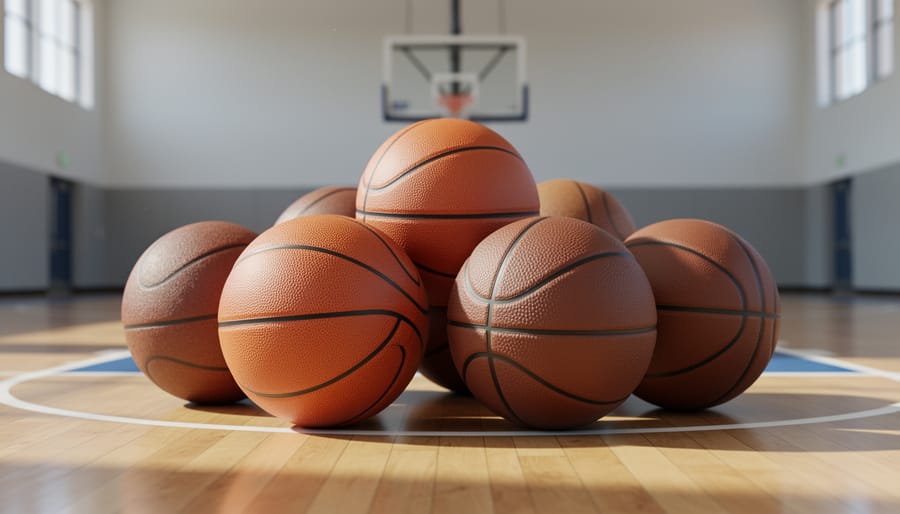
Game basketballs come in three official sizes regulated by FIBA and most governing bodies. Size 7 basketballs measure 29.5-29.875 inches in circumference and weigh 20-22 ounces, used for men’s competitive play from age 15 up. Size 6 balls are 28.5-28.875 inches in circumference, weighing 18-20 ounces, designated for women’s and youth players aged 12-14. Size 5 basketballs, at 27.5-27.75 inches and 14-16 ounces, suit players under 12. Each size requires inflation to 7.5-8.5 PSI for proper bounce height and handling characteristics.
Material composition directly affects performance and durability. Full-grain leather basketballs offer superior grip and consistent feel but require break-in time and indoor-only use, as moisture degrades the surface. Composite leather (synthetic materials mimicking leather texture) provides excellent grip without extensive break-in, works indoors, and costs less than genuine leather. Rubber basketballs withstand outdoor elements, concrete surfaces, and weather exposure but deliver harder feel and less responsive touch.
Indoor basketballs feature softer covers with deeper pebbling for enhanced grip on clean courts. Outdoor versions use tougher rubber compounds and shallower channels to resist abrasion from asphalt. Look for certification marks from FIBA, NCAA, or Basketball Canada indicating regulation compliance and performance testing.
Court flooring serves as the foundation of basketball performance and player safety. Two primary options dominate the market: traditional hardwood maple and modern synthetic surfaces. Hardwood maple remains the gold standard for competitive facilities, specified at ¾-inch thickness with a vertical grain orientation that provides optimal ball response and consistent bounce characteristics. The wood strips are typically 2¼ inches wide, sanded smooth, and finished with polyurethane coatings that offer both traction and durability.
Synthetic courts have gained traction in multi-sport facilities and budget-conscious installations. These systems use modular tiles, rolled rubber, or poured polyurethane surfaces that deliver adequate performance at lower initial costs. However, they often sacrifice the authentic ball bounce and foot feel that serious players expect.
Traction standards matter equally. Look for coefficient of friction values between 0.5 and 0.7, which provide the grip players need without causing foot entrapment during quick directional changes.
Installation methods fall into two categories. Anchored systems fasten directly to the subfloor using cleats or adhesive, creating a permanent installation ideal for dedicated basketball venues. Floating floors rest on a cushioned underlayment without direct attachment, allowing the surface to move slightly and absorb impact more effectively. Floating installations also simplify future repairs since individual sections can be replaced without disrupting the entire court.
Maintenance demands differ sharply. Hardwood requires regular dust mopping, periodic screening and recoating every few years, and complete refinishing every decade depending on usage intensity. Synthetic surfaces need less frequent attention but may require specialized cleaning products to prevent surface degradation. Canadian facilities should verify that any flooring system meets CSA standards for sports surfaces and complies with provincial building codes governing athletic facilities.
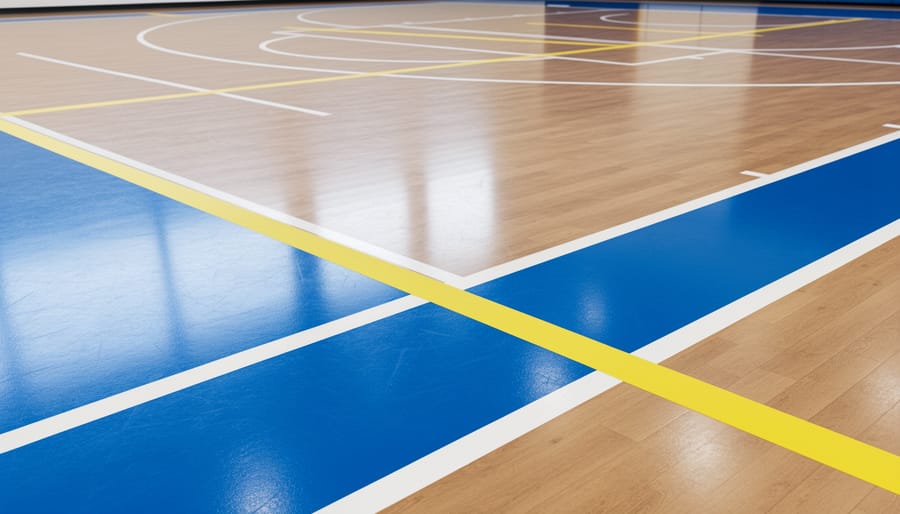
Court line marking requires precision and durability to maintain regulation play standards while withstanding heavy foot traffic. Permanent line marking paint must meet ASTM F3012 specifications for slip resistance, typically achieving a coefficient of friction above 0.50 when wet. Water-based acrylic paints designed for sports surfaces provide the best balance of durability, quick drying times (2-4 hours), and low VOC emissions, essential for indoor facilities with limited ventilation.
For multi-sport facilities sharing basketball with volleyball or badminton, removable vinyl tape systems offer flexibility. Court tape should be 2 inches wide for most basketball lines, with 3-inch tape used for boundary lines in some facilities. Quality court tape features pressure-sensitive adhesive that bonds to sealed wood or synthetic surfaces without leaving residue, yet removes cleanly for layout changes.
Regulation basketball lines include the free-throw lane (16 feet wide), three-point arc (22 feet from the basket at the top of the key in Canadian high school play, 23.75 feet for international standards), and centre circle (12-foot diameter). White remains the standard colour, though contrasting colours like yellow or blue can delineate overlapping court systems.
Application method matters significantly. Professional line striping requires proper surface preparation, precise measurement, and application temperatures between 50-90°F. Stencils ensure uniform line width, while laser levels guarantee straight alignment across the court’s length.
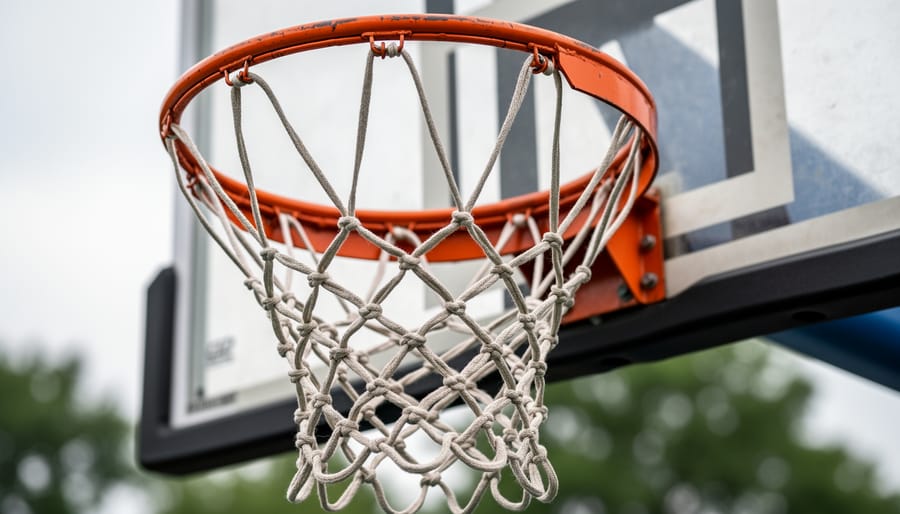
Basketball nets endure constant stress from repeated shots, weather exposure, and facility usage patterns. The material you select directly affects replacement frequency and player experience.
Standard nylon nets dominate indoor facilities due to their soft feel and quiet operation. They typically last 6-12 months with moderate use before fraying occurs. For outdoor courts, all-weather nylon incorporates UV-resistant treatments that extend lifespan to 12-18 months despite sun exposure and temperature fluctuations.
Polyester nets offer superior durability, lasting up to two years outdoors, with enhanced resistance to moisture absorption and rot. Their slightly stiffer construction produces a distinct swish sound that many players prefer.
Chain nets provide the longest lifespan (3-5 years) for high-traffic outdoor courts and vandalism-prone areas. Steel chains resist cutting and weathering but create noise and lack the tactile feedback of cord nets.
Anti-whip construction features tighter weave patterns and reinforced loops that prevent nets from tangling around the rim after shots. This design proves essential for facilities running continuous drills or hosting games.
Attachment mechanisms range from simple 12-loop systems for standard rims to heavy-duty hooks for breakaway rim installations. Match loop count and spacing to your rim specifications to ensure proper tension and centering.
Choose heavy-duty nets with reinforced stitching and thicker cord diameter (6mm versus 4mm standard) for facilities operating more than 40 hours weekly or hosting competitive play.
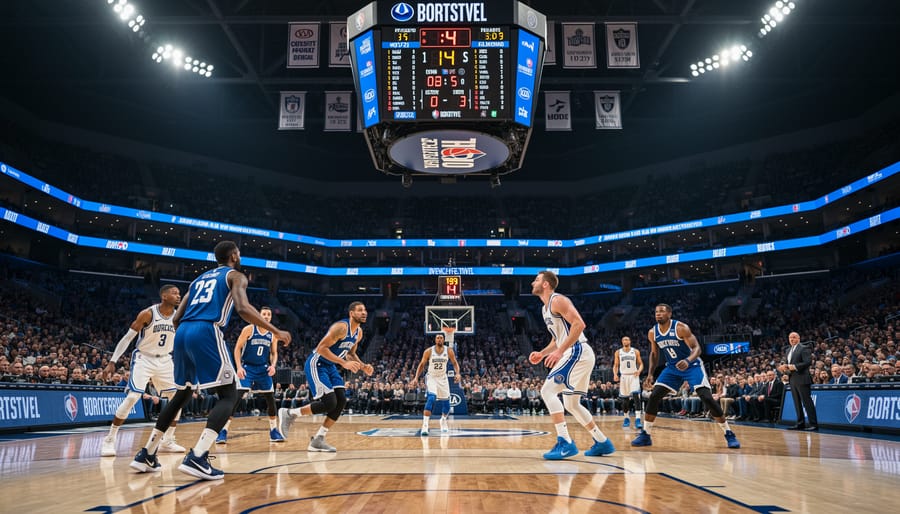
Scoreboards and shot clocks form the timing backbone of any competitive basketball facility, with specifications that vary significantly based on league requirements and venue size. Electronic scoreboards dominate modern installations due to their reliability and ease of operation, while manual scoreboards remain viable only for small recreational facilities where budget constraints outweigh convenience.
Shot clocks are mandatory for competitive play, with the 24-second standard applying to most adult leagues and professional games. High school and youth leagues may use 30 or 35-second clocks depending on regional regulations. The shot clock must be visible from all court positions and synchronized with the main scoreboard to prevent disputes during game flow.
LED displays have largely replaced incandescent and flip-digit scoreboards because they offer superior brightness, lower power consumption, and visibility in venues with natural light. Traditional displays work in controlled lighting but struggle with glare and readability from distance. Consider the farthest spectator seat when sizing displays, a 15-foot viewing distance requires at least 3-inch digit height, while gymnasiums with 50-foot sight lines need 10-inch or larger digits.
Wireless control systems eliminate the cable runs required by wired controllers, simplifying installation and allowing operators to move freely around the venue. When evaluating scoreboard systems, prioritize these features:
Mounting height and angle affect readability, scoreboards should hang at least 15 feet above the court surface, angled slightly downward for optimal viewing. Integration with timing systems, including horn activation and period management, streamlines game operations and reduces operator workload during high-pressure moments.
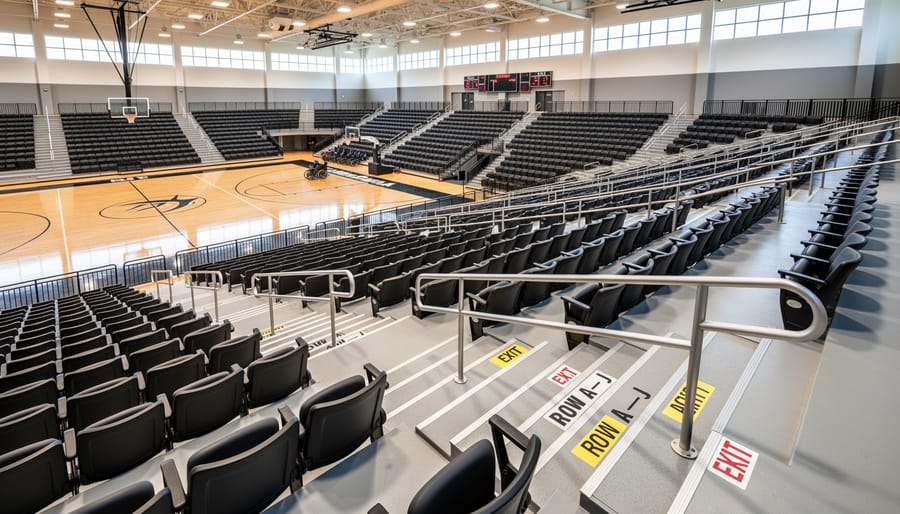
Gymnasium bleachers and spectator seating represent a critical infrastructure investment for basketball facilities, directly impacting spectator capacity, safety, and venue versatility. Understanding the specifications and trade-offs between retractable and fixed systems helps facility operators make decisions that serve their space and budget for decades.
Retractable vs. Fixed Bleacher Systems
Retractable bleachers fold against walls when not in use, freeing floor space for practices, PE classes, or multi-sport activities. They’re ideal for facilities that require flexible space configurations. Fixed bleachers remain stationary and generally cost 30-40% less upfront, making them suitable for dedicated basketball venues with consistent seating needs.
Capacity Planning and Structural Specifications
Bleacher capacity calculations follow a standard 18 inches of seating width per person. A 10-row retractable system spanning 30 feet accommodates approximately 200 spectators. Structural materials include aluminum frames for lighter weight and corrosion resistance, or steel for heavy-duty applications in high-traffic facilities.
Safety and Compliance Requirements
Canadian facilities must incorporate guardrails on bleachers exceeding 30 inches in height, with aisle widths of minimum 36 inches for egress. ADA compliance mandates wheelchair-accessible seating areas with companion seating, typically positioned at courtside or mid-level platforms with ramp access. Non-slip footboards and closed risers prevent trip hazards.
Maintenance involves annual inspections of mounting hardware, hydraulic systems on retractable units, and deck integrity, with professional servicing extending equipment lifespan beyond 20 years.
Protective padding for walls and poles serves as a critical safety barrier in basketball facilities, absorbing impact forces when players drive aggressively toward the basket or chase loose balls. Regulation-compliant padding typically requires a minimum thickness of 2 inches (50mm) for wall base installations, with high-density polyethylene or polyurethane foam cores that provide impact absorption ratings between 40-60 durometer. The foam density directly correlates to energy dissipation, denser foam (around 6 pounds per cubic foot) offers superior protection for high-traffic competitive venues, while recreational facilities may use slightly lower densities to balance cost and safety.
Vinyl coverings must withstand repeated contact without tearing or delaminating. Look for 18-ounce vinyl with reinforced seams and double-stitching, which resists abrasion from shoes and maintains its protective qualities through thousands of impacts. Commercial-grade vinyl comes in various colours, typically matching team colours or facility branding, and should feature antimicrobial properties to prevent bacterial growth in high-moisture environments.
Mounting systems vary between permanent adhesive installations and modular hook-and-loop systems that allow seasonal removal for multi-sport facilities. Pole wraps require cylindrical padding sections with overlapping seams and secure Velcro closures, with coverage extending from floor level to 6-7 feet high to protect the impact zones where players most frequently collide with support structures.
Training cones and markers serve as fundamental tools for organizing drills, defining boundaries, and creating agility courses during basketball practice sessions. These versatile pieces of equipment help coaches structure effective training while maximizing court space efficiency.
Standard training cones stand between 6 and 12 inches tall, with 9-inch models offering the best balance of visibility and stability for basketball drills. Plastic cones provide lightweight portability and vivid colour options, while rubber alternatives deliver superior durability and weighted bases that resist tipping during fast-paced movements. High-quality rubber cones typically feature a minimum thickness of 3mm to withstand repeated contact from players and equipment.
Weighted bases prove essential for facilities with climate control systems, as air circulation can topple lightweight markers. Look for cones with base diameters of at least 7 inches and integrated weight distribution, or models with hollow bases designed to accept sand or water for added stability.
Colour coding transforms practice organization, red for offensive positions, blue for defensive setups, yellow for transition points. Facilities running multiple programs simultaneously benefit from purchasing cone sets in four to six distinct colours to differentiate drill stations without confusion.
Stackable designs with nesting capabilities reduce storage footprint significantly, while mesh carrying bags or wheeled carts accommodate sets of 20 to 50 cones for quick setup and teardown between training sessions.
Ball racks and storage carts solve one of the most overlooked organizational challenges in basketball facilities: keeping multiple balls accessible yet contained. Capacity ranges from compact 6-ball racks suitable for small training spaces to 30-ball carts that serve large gyms running concurrent programs. Most facilities find 12- to 18-ball models hit the sweet spot for practice sessions.
Mobile carts with heavy-duty casters, typically 3 to 5 inches in diameter, let coaches wheel equipment courtside, then roll it back to storage. Look for locking swivel wheels on at least two corners to prevent unwanted movement during drills. Stationary racks work well in dedicated storage rooms but limit flexibility for multi-sport venues that reconfigure spaces throughout the day.
Construction quality matters for longevity. Welded steel tube frames withstand years of loading and transport better than bolted alternatives. Powder-coated finishes resist rust in humid gym environments. Mesh or perforated sides allow air circulation, preventing odour buildup from sweaty game balls. Some models stack or nest when empty, reducing storage footprint, a practical feature when sharing equipment closets with volleyball, soccer, and other programs.
Modern basketball uniforms combine performance fabrics with practical design features to handle the demands of competitive play. Understanding fabric technology and sizing standards helps facility operators and coaches make informed purchasing decisions that balance player comfort with long-term value.
Performance fabrics in quality basketball uniforms use polyester blends engineered for moisture management. These materials pull sweat away from skin through capillary action, moving moisture to the fabric’s outer surface where it evaporates quickly. Look for fabrics rated at 100-150 GSM (grams per square meter) for jerseys, heavier weights resist tears but can feel stiff. Mesh ventilation zones typically appear across the back, under arms, and along side panels where heat builds during play. These perforated sections increase airflow by 30-40% compared to solid fabric construction.
Sizing follows athletic cut standards rather than casual wear dimensions. Most manufacturers offer youth sizes (YS-YL) and adult sizes (S-3XL), with jerseys running slightly loose for unrestricted movement. Measure chest circumference and compare against manufacturer charts, as sizing varies between brands. Shorts should sit at the waist with inseam lengths ranging from 7-11 inches depending on preference and league requirements.
Numbering must meet visibility standards: front numbers at least 4 inches tall, back numbers 6 inches minimum. Screen-printed numbers offer the most durability through 50+ washes, while heat-pressed options cost less but may crack after 20-30 cycles. Reversible practice jerseys with contrasting colours eliminate the need for separate scrimmage sets, though single-layer reversibles won’t match game jersey quality.
When ordering for teams, buy 2-3 extra sets in common sizes for replacements and new roster additions.
Athletic footwear represents perhaps the most personal equipment choice for basketball players, directly affecting performance, injury prevention, and comfort during play. The right shoes balance ankle protection, court grip, and impact absorption across thousands of movements per game.
Ankle support classifications define the fundamental shoe architecture. Low-top designs offer maximum mobility and lighter weight, preferred by guards who prioritize quick cuts and speed. Mid-top shoes provide moderate ankle coverage while maintaining agility, suitable for versatile wing players. High-top models extend above the ankle joint, delivering maximum lateral support for post players and athletes with previous ankle injuries, though they add weight and can restrict some movement patterns.
Outsole traction patterns prove critical for indoor court performance. Herringbone patterns provide excellent multi-directional grip on hardwood and synthetic surfaces, while circular or hexagonal pod designs offer pivot points for rotation moves. Avoid deep outdoor treads that collect dust and reduce court contact. The rubber compound matters too, softer compounds grip better but wear faster, while harder rubber extends lifespan at slight traction cost.
Cushioning technologies vary by manufacturer but serve the same purpose: absorbing repetitive impact from jumping and landing. Air-based systems, foam technologies, and gel inserts each reduce stress on knees and joints. Test cushioning by pressing the midsole, it should compress slightly but spring back quickly. Players carrying extra weight or those seeking training weight tips particularly benefit from enhanced cushioning to protect joints during conditioning work.
Fit trumps brand loyalty. Shoes should feel snug through the midfoot with minimal heel slippage, while toes need roughly a thumb’s width of space. Width matters, narrow feet slide in standard widths, wide feet cramp and blister. Most quality basketball shoes require minimal break-in, perhaps 1-2 practice sessions. If shoes cause pain after this period, they don’t fit properly.
Replace basketball shoes when traction patterns visibly flatten, when the outsole edge shows significant wear, or when cushioning no longer rebounds underfoot. Budget-conscious programs can buy used gear for practice sessions while reserving newer shoes for games, extending equipment budgets without compromising game-day performance.
Portable training equipment transforms any space into a basketball conditioning zone, requiring zero permanent installation. Agility ladders typically measure 15 to 20 feet long with rungs spaced 12 to 18 inches apart, adjustable models let coaches modify spacing for different drill intensities. Look for flat rung construction that lies flush against hardwood courts without damaging floor finishes, and reinforced side straps that resist stretching during lateral movements.
Resistance bands come in color-coded tension levels from 10 to 50 pounds resistance. Basketball-specific training requires bands with door anchors or pole attachment clips for stationary drills, plus handle grips that won’t slip during explosive movements. Looped bands work better for leg resistance work and defensive slide training.
Quality jump ropes feature length-adjustment mechanisms, typically knots or ferrule systems, to accommodate athletes from 5’2″ to 6’8″. Ball-bearing swivel handles reduce rope twisting during double-unders and speed work. Weighted handles (4 to 6 ounces) build forearm endurance for better ball control.
All three items pack flat into equipment bags no larger than a basketball, making them ideal for teams sharing facilities. Replace agility ladders when rungs crack, bands when elasticity degrades (typically 12 to 18 months with daily use), and ropes when cables fray.
Basketball facilities in Canada must maintain comprehensive safety equipment to protect players and meet regulatory standards. A well-stocked first aid station should be easily accessible courtside, equipped to handle common basketball injuries like sprains, cuts, and impact trauma.
Essential safety items include:
Provincial workplace safety regulations often require facilities to document staff training and equipment inspections. AEDs need monthly visual checks and battery replacements according to manufacturer specifications. When outfitting a new facility, choose the right supplier who understands Canadian safety compliance and can provide equipment that meets CSA standards. Keep first aid supplies replenished and check expiration dates quarterly to ensure readiness during emergencies.
Selecting the right basketball equipment for your facility comes down to aligning technical specifications with your actual needs. A community recreation centre requires different flooring shock absorption, backboard durability, and bleacher capacity than a competitive training facility. Start by defining your primary user groups and usage intensity, then match equipment grades accordingly rather than defaulting to either the cheapest or most premium options available.
Safety certifications and compliance standards aren’t negotiable. Verify that hoops meet breakaway rim requirements, protective padding meets impact absorption ratings, and bleacher systems satisfy current ADA regulations. These specifications protect both your users and your organization from liability while extending equipment lifespan through proper engineering.
Budget planning works best when you factor in total cost of ownership. A hardwood court costs more upfront than synthetic surfaces but may deliver better performance and durability over 20 years. Similarly, investing in weather-resistant outdoor equipment or commercial-grade storage systems reduces replacement frequency and ongoing maintenance expenses.
Establish replacement schedules based on manufacturer specifications and actual wear patterns. Basketballs, nets, and court line markings need regular replacement, while hoops, flooring, and bleachers represent long-term investments. Working with knowledgeable suppliers who understand Canadian facility requirements helps you make decisions that serve your community effectively for years ahead.
Indoor basketballs typically feature leather or composite leather covers optimized for hardwood courts, offering superior grip and consistent bounce. Outdoor basketballs use rubber or durable synthetic materials that withstand rough asphalt surfaces and weather exposure, though they sacrifice some feel and control compared to indoor models.
Hardwood maple flooring in high-traffic facilities typically requires refinishing every 8-10 years under normal use, though annual screening and recoating extends lifespan. Usage intensity, maintenance practices, and visible wear patterns determine the actual schedule more than a fixed timeline.
Look for compliance with relevant safety standards for your region, including certifications that verify breakaway rim mechanisms, structural load ratings, and proper mounting specifications. Professional installations should include documentation confirming the system meets regulatory requirements for your facility type.
Fixed bleachers make sense for dedicated basketball venues with consistent seating needs, while retractable systems suit multi-purpose facilities requiring flexible floor space. Consider your event frequency, available wall space for retraction, budget, and whether you need the gymnasium for non-sporting activities.
Quality basketball hoops and backboard systems last 15-25 years with proper maintenance, while nets need replacement every 1-3 years depending on usage. Court flooring can serve 20-30 years with regular refinishing, and protective padding typically requires replacement every 10-15 years as foam compression and vinyl wear occur.
Yes, mixing brands is perfectly acceptable and often necessary to balance quality and budget across different equipment categories. Focus on matching specifications and standards rather than brand consistency, ensuring each piece meets your facility’s performance and safety requirements regardless of manufacturer.
These questions reflect the concerns facility operators and sports organizations encounter when outfitting basketball venues. Understanding these practical details helps you make confident decisions that balance performance requirements, safety standards, and long-term value. Whether you’re managing a municipal recreation center or a competitive sports facility, knowing when to invest in premium equipment versus functional alternatives determines both your upfront costs and ongoing operational efficiency.